PSS Design · Service Design · AI Integration · 2024–2025
Food delivery was built
for speed. We rebuilt it
for health.
The Problem
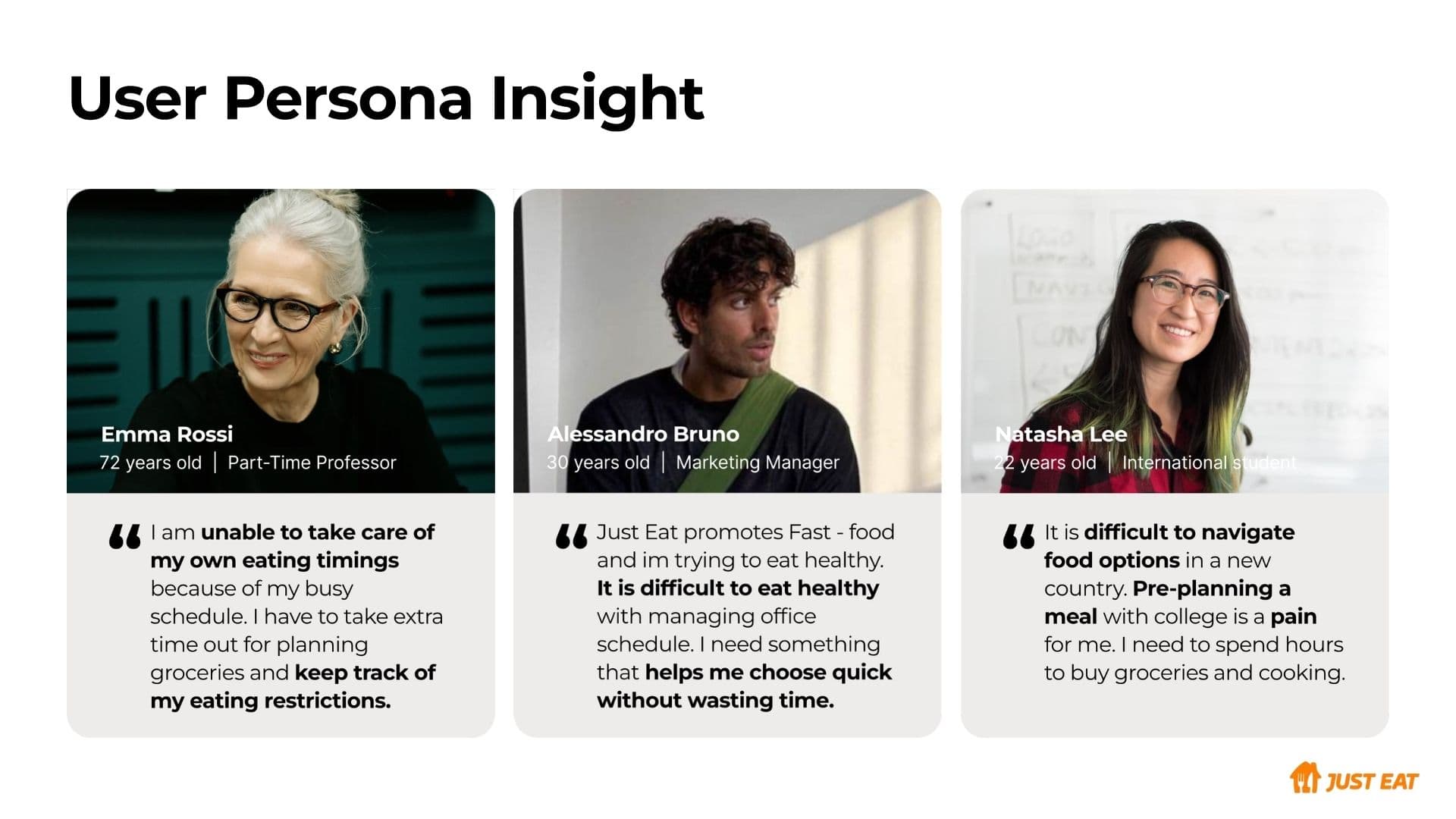
Just Eat built its brand on convenience — fast food, fast delivery, low friction. But the users actually using the platform have more complex needs. A 72-year-old professor managing dietary restrictions. A marketing manager trying to eat well between back-to-back meetings. An international student who cannot navigate food in a new country without spending hours planning.
The current service solves one problem: getting food to you quickly. It does not touch what those users actually want: health, consistency, and a sense of being looked after. The brief was to redesign Just Eat’s service model using Product-Service System thinking — mapping the full ecosystem of products, services, and experiences, not just the app.
Trend Context
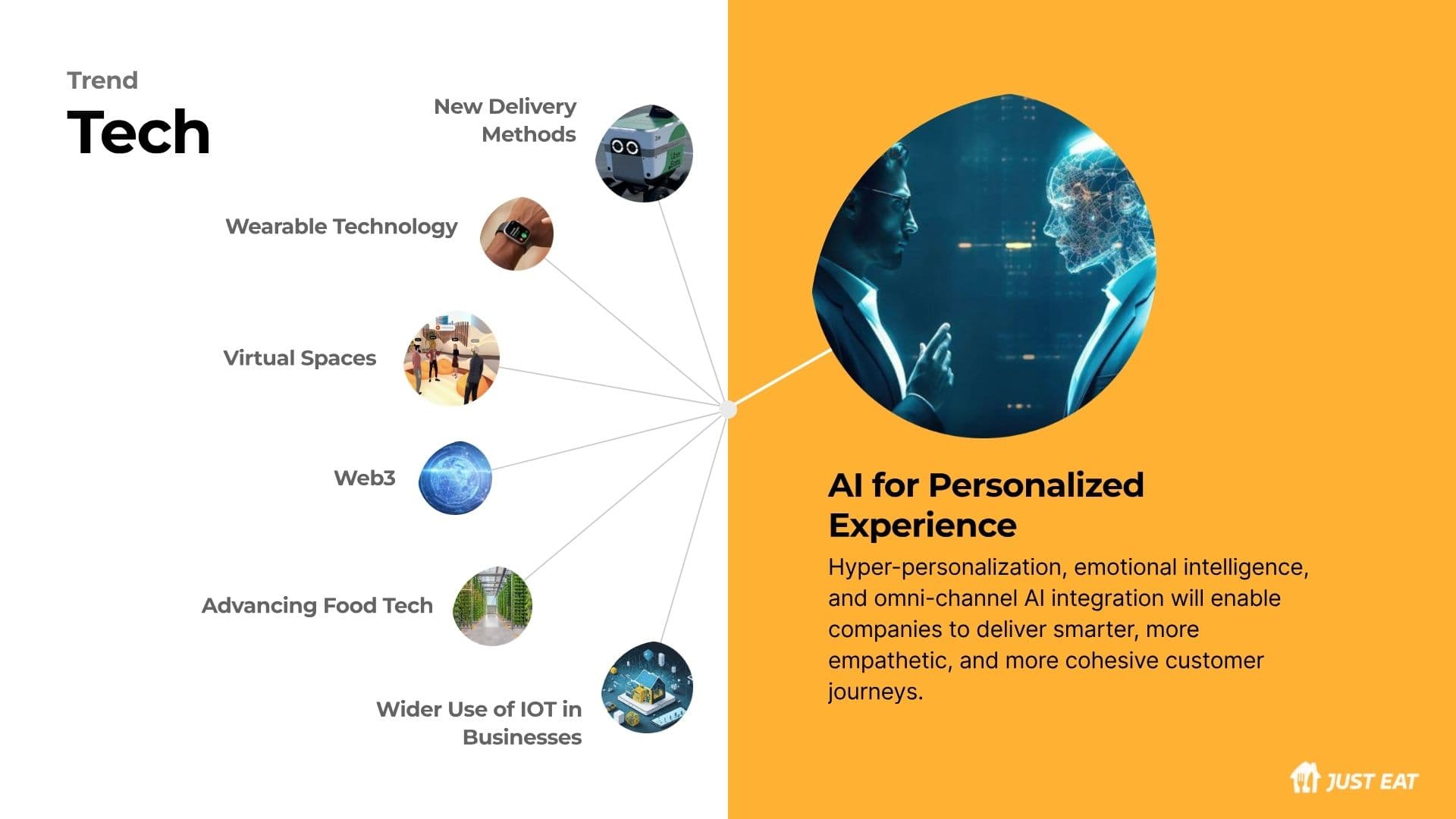
Three macro-trend areas shaped the opportunity space — each pointing toward the same conclusion: the next wave of food delivery is not about speed. It is about alignment with how people actually want to live.
Market
- Single-person households growing rapidly
- 7-Eleven pushing European expansion by 2030
- Circular economy reshaping food sourcing expectations
Social
- Veganism, keto, intermittent fasting moving mainstream
- Health and longevity as primary consumer motivation
- Mental health and community belonging growing in priority
Technology
- AI hyper-personalisation enabling emotionally intelligent journeys
- Wearables and IoT creating real-time health data opportunities
- Drones, cargo bikes, lockers reshaping last-mile delivery
User Research
Three personas grounded all design decisions in real behaviour. Each has a distinct barrier to eating well — but across all three, the same three overlapping needs emerge: Health, Convenience, and Experience. The current service addresses only the middle one.
Emma Rossi, 72
Part-Time Professor
Alessandro Bruno, 30
Marketing Manager
Natasha Lee, 22
International Student
The Offering
Just Eat Cares is a complete Product-Service System designed across three layers. The offering map shows how all components connect around a single purpose: help people eat well, consistently.
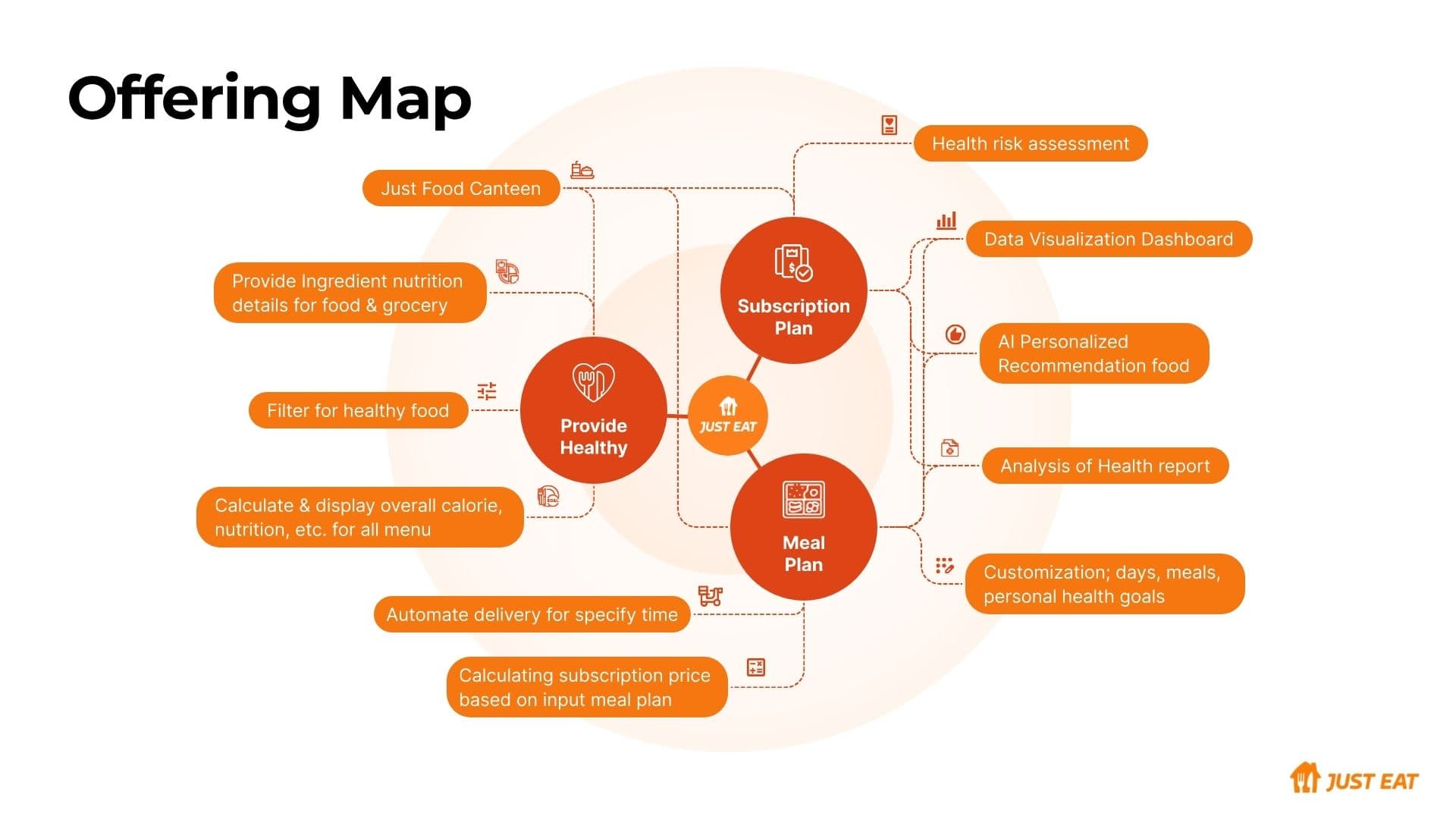
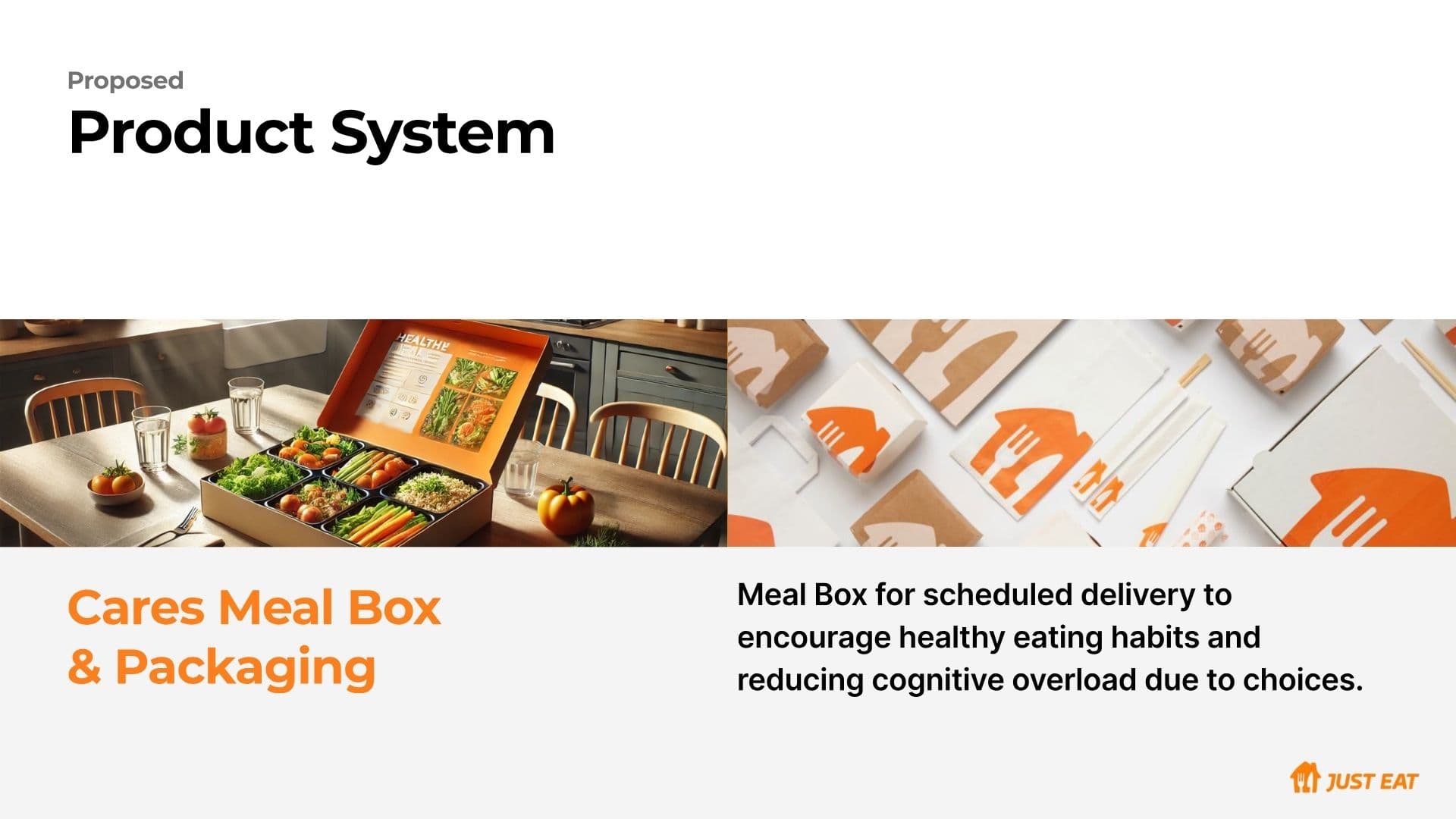
Product System
Cares Meal Box
Digital Services
Meal Planner · AI Dietary Recommendations · Care Rewards
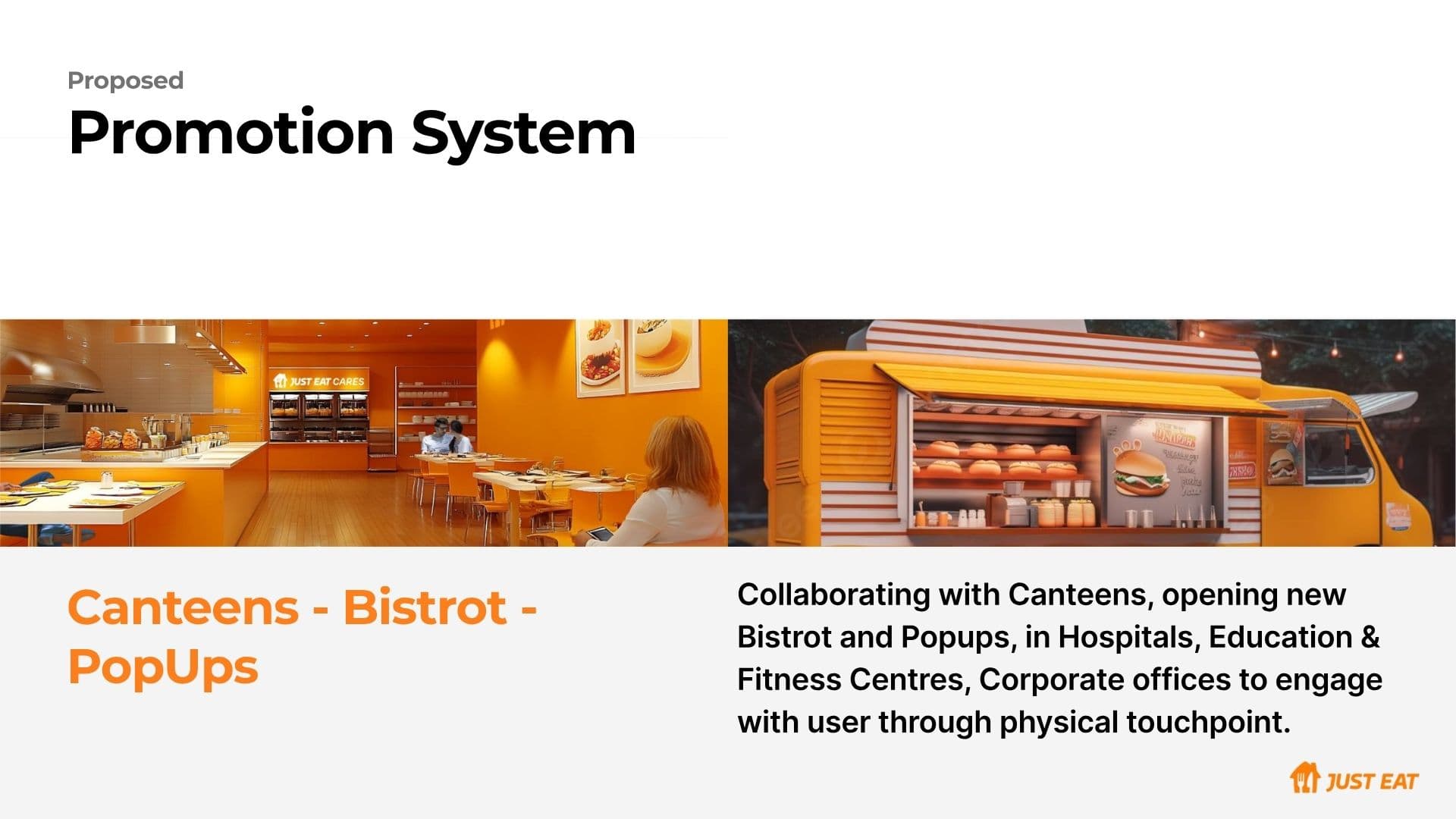
Physical Network
Canteens · Bistros · Pop-Up Food Trucks
Cares Meal Box
A scheduled, personalised meal box — not restaurant takeaway, but curated healthy meals planned around the user’s dietary goals. Packaging designed to reinforce brand recognition and minimise environmental impact. The Meal Box removes the choice burden entirely.
Service System — Digital Components
Just Eat Cares Meal Planner
AI-Based Dietary Recommendations
Care Rewards
Physical Touchpoints
Physical touchpoints placed where users’ health decisions are most influenced — hospitals, educational institutions, fitness centres, corporate offices. Canteens, bistros, and pop-up food trucks serve two functions: discovery (getting new users into the ecosystem) and consistency (reinforcing the habit at moments of maximum intent). The physical network is what connects the digital service to the lived world.
Re-Imagined User Journey
The complete customer journey mapped from discovery through ongoing use — each touchpoint designed, every emotional state addressed. From neutral awareness at a canteen or pop-up, through curious consideration, to a subscription that converts into delight through habit.
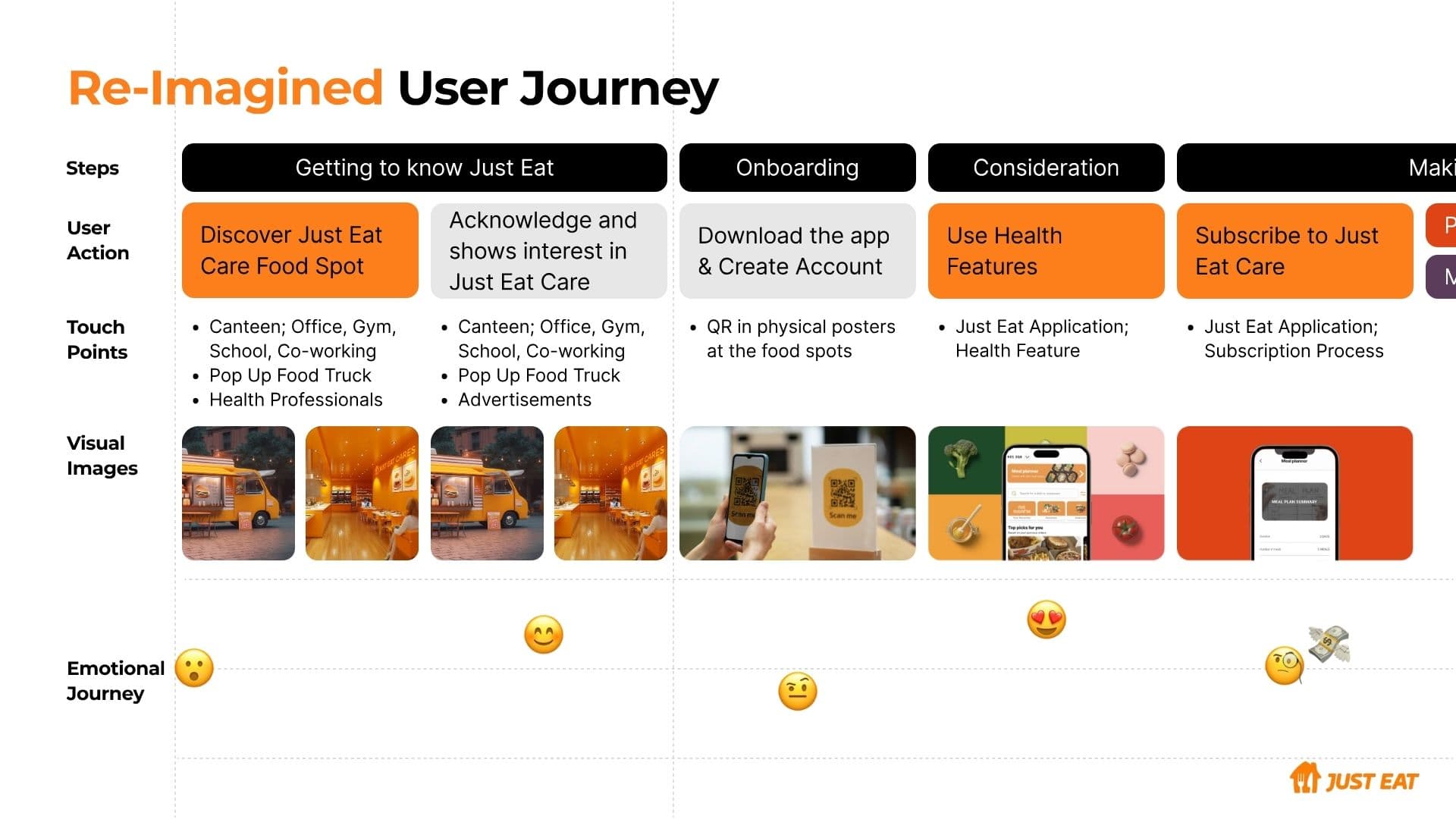
Discovery
Canteen · Office · Gym · Pop-Up · Advertisements
Consideration
Acknowledge Just Eat Care · Download app
Onboarding
Create account via QR at physical food spots
Use
Personalised health recommendations · Subscribe to Care plan
Retention
Meal Plan · Care Rewards · Habit reinforcement loop
“Convenience was never the real problem. The real problem was that nobody designed a service that actually helped people eat well.”