GTM Strategy · Brand Strategy · Content Design · 2026
GreenAhara.
1 gram. 1 meal. 1 second.
The Problem
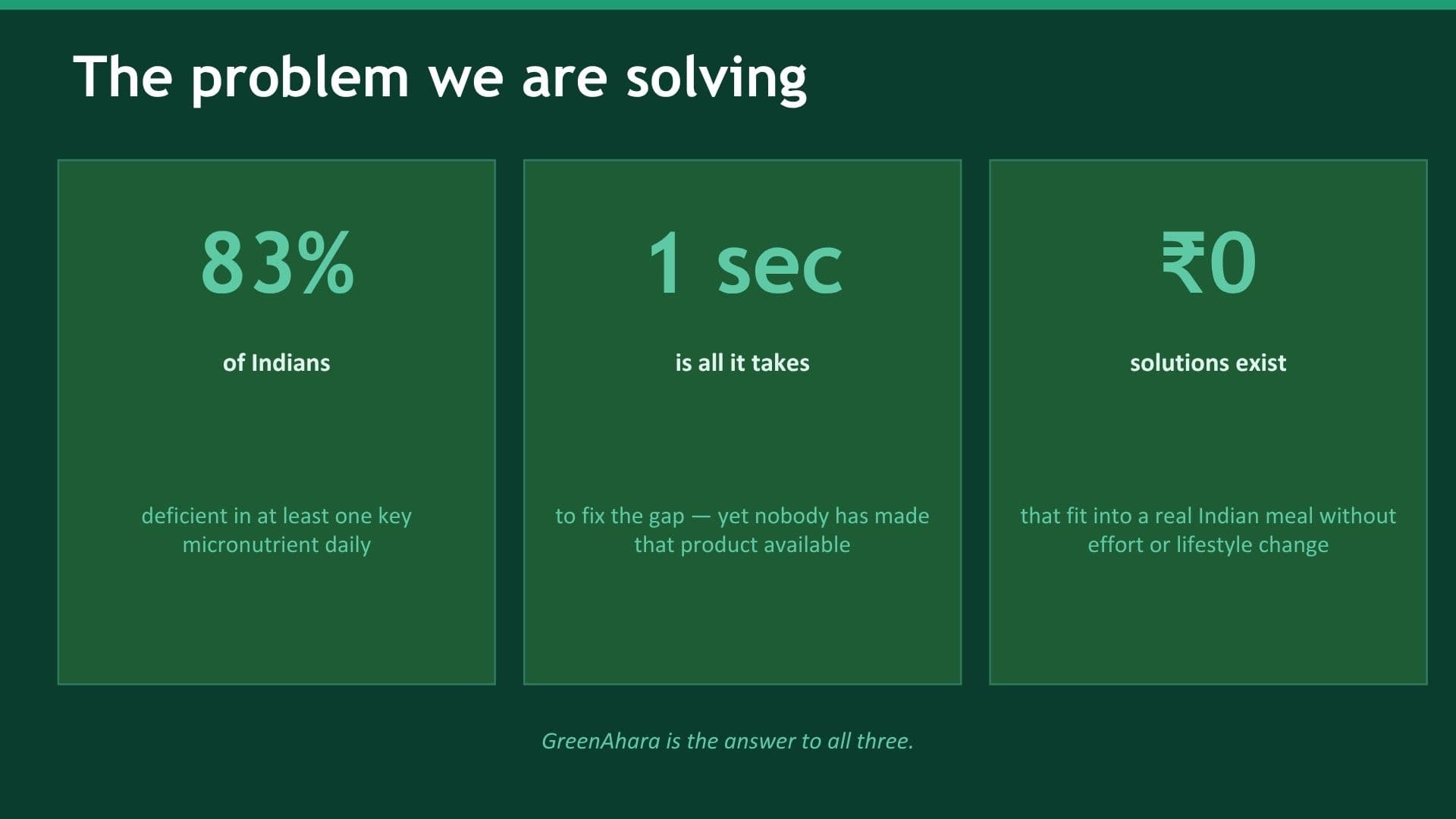
83% of Indians are deficient in at least one key micronutrient daily. The gap takes one second to fix — one gram of freeze-dried microgreens sprinkled on any meal. Yet no product existed that fit into a real Indian meal without effort or lifestyle change.
The challenge wasn’t the product. It was building trust fast enough in a category full of supplement scepticism — among people who already cook their own food and don’t want to be told they’re doing it wrong.
The Product
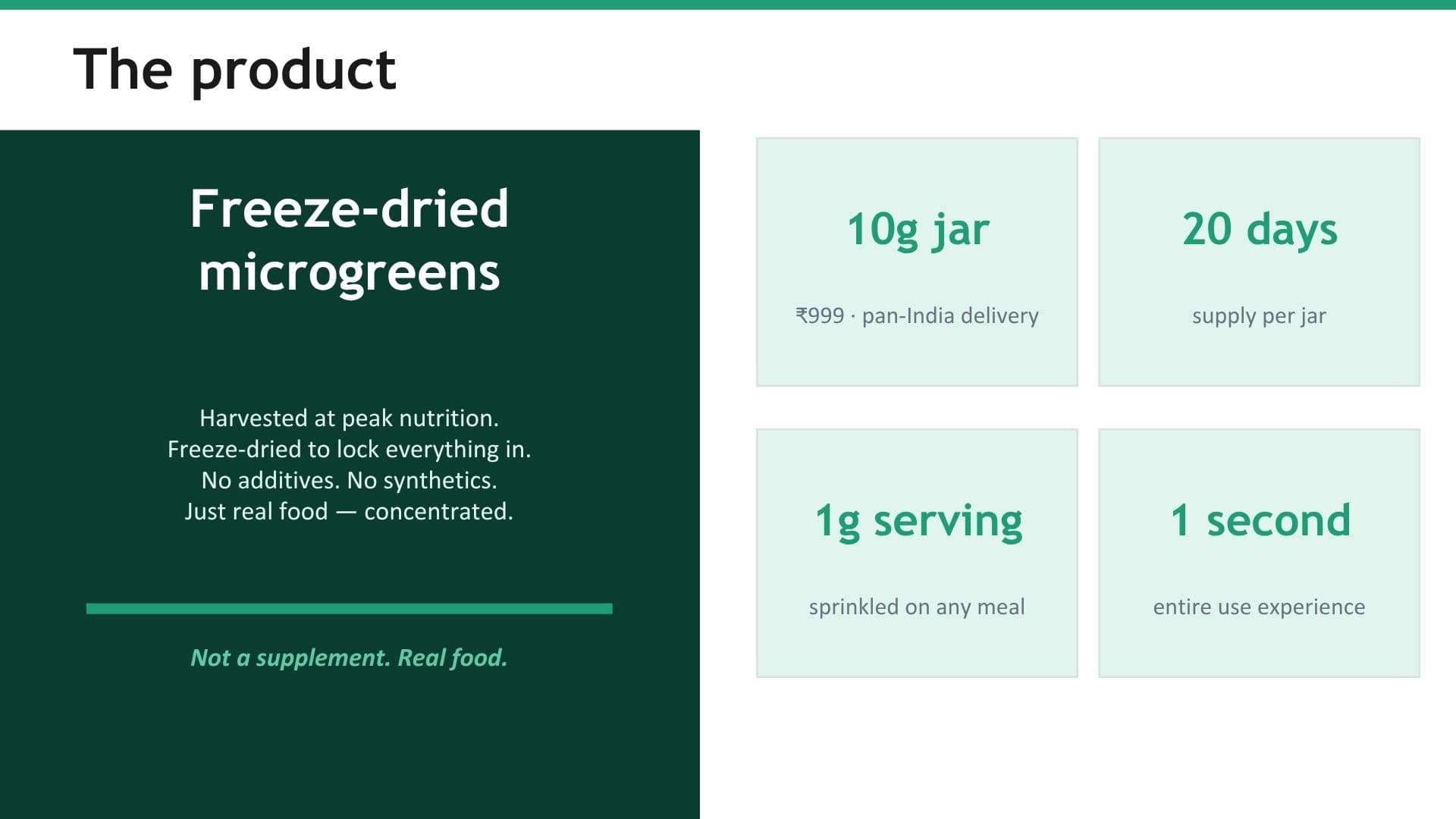
GreenAhara is freeze-dried microgreens harvested at peak nutrition — no additives, no synthetics, just real food concentrated. Not a supplement. A 1g serving sprinkled on any meal, in one second, delivers what the modern Indian diet is missing. The entire use experience is designed to be frictionless: a 10g jar, a 20-day supply, delivered pan-India.
Who We’re Designing For
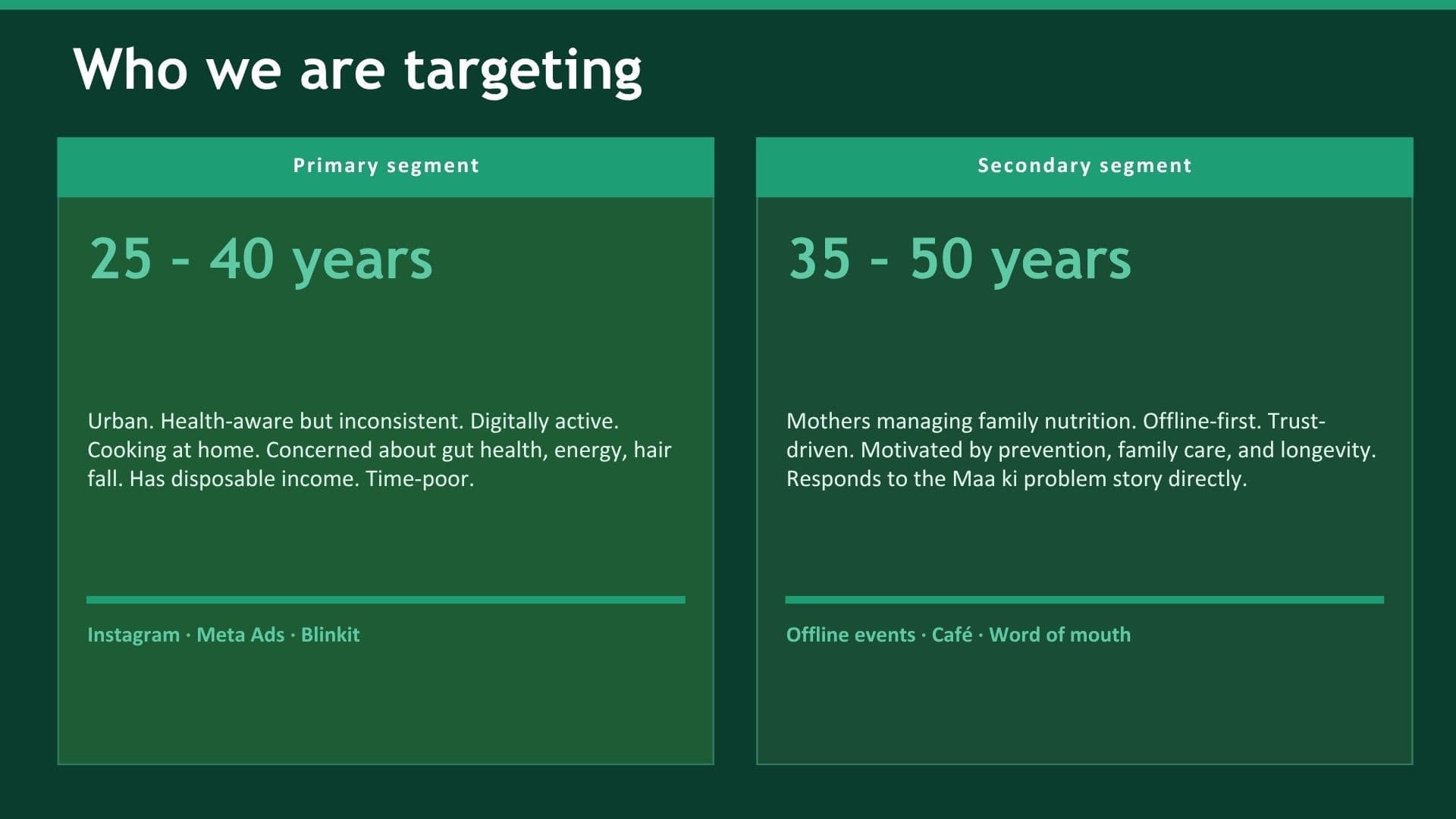
Two distinct segments with different motivations and different discovery paths. The primary segment is urban, health-aware, time-poor, and digitally active. The secondary segment is mothers managing family nutrition — trust-driven, offline-first, and highly responsive to the founder’s family story.
Creative Positioning
Every hook is built around one truth: 1 gram sprinkled on 1 meal takes 1 second. That is the product. Three distinct creative frames — brand tagline, primary ad hook, and cultural frame — each designed to land differently depending on where and who they reach.
Brand tagline
Primary ad hook
Cultural frame
The Brand Story
“Maa ki problem” — the brand launches through a five-episode founder story. Unscripted, authentic, shot as a family conversation. The founder narrative is the brand’s strongest trust asset — more powerful than any ad because it cannot be faked and it cannot be replicated.
Episode 1
Maa ki problem
Episode 2
The discovery
Episode 3
The sceptic
Episode 4
The test
Episode 5
GreenAhara is born
Content Strategy
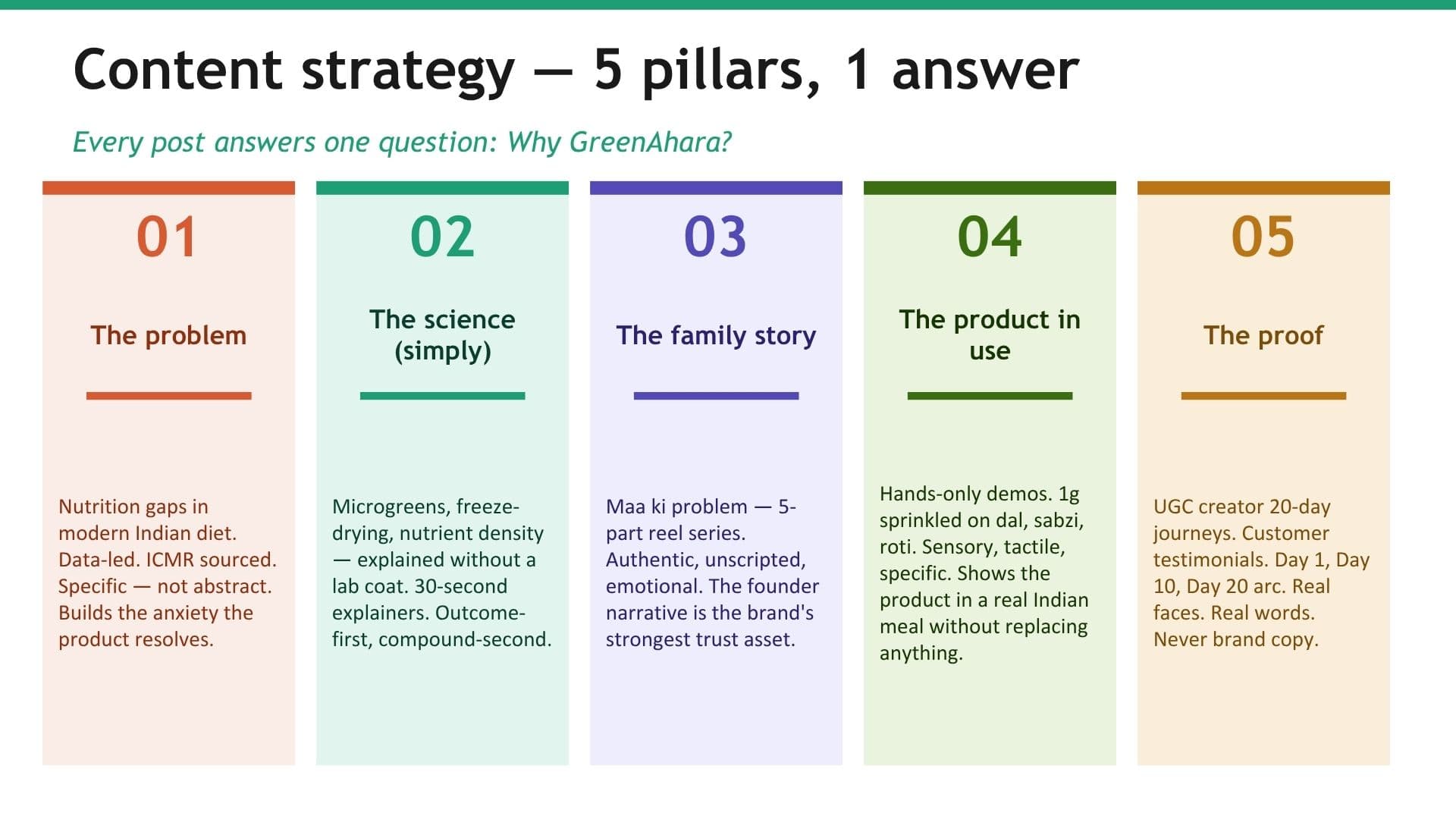
Five content pillars, each answering one question: why GreenAhara? The problem (data-led, anxiety-building), the science (explainers without a lab coat), the family story (emotional, unscripted), the product in use (hands-only demos on real Indian meals), and the proof (UGC 20-day journeys). No brand copy. Real faces. Real words.
Channel Strategy
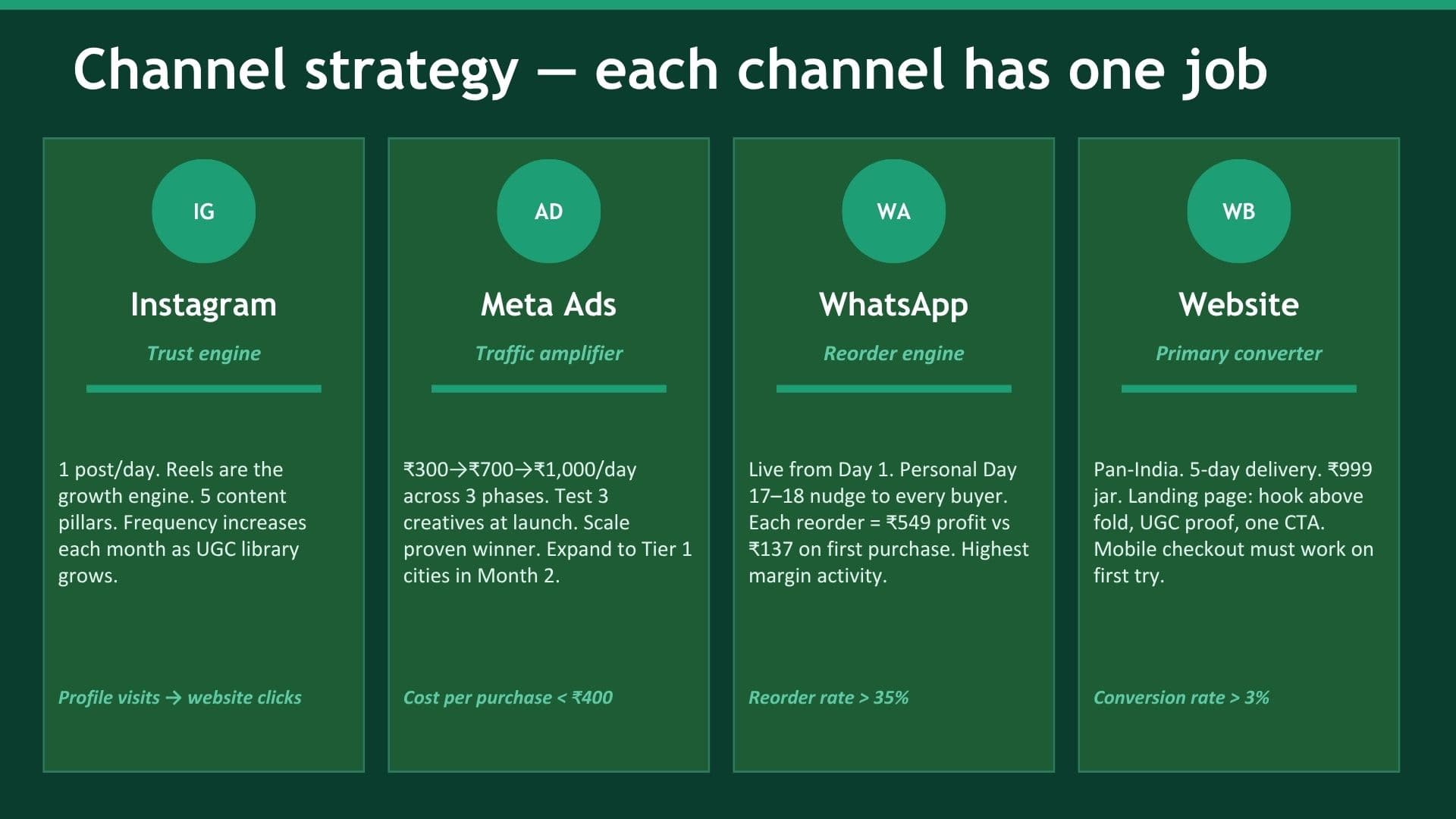
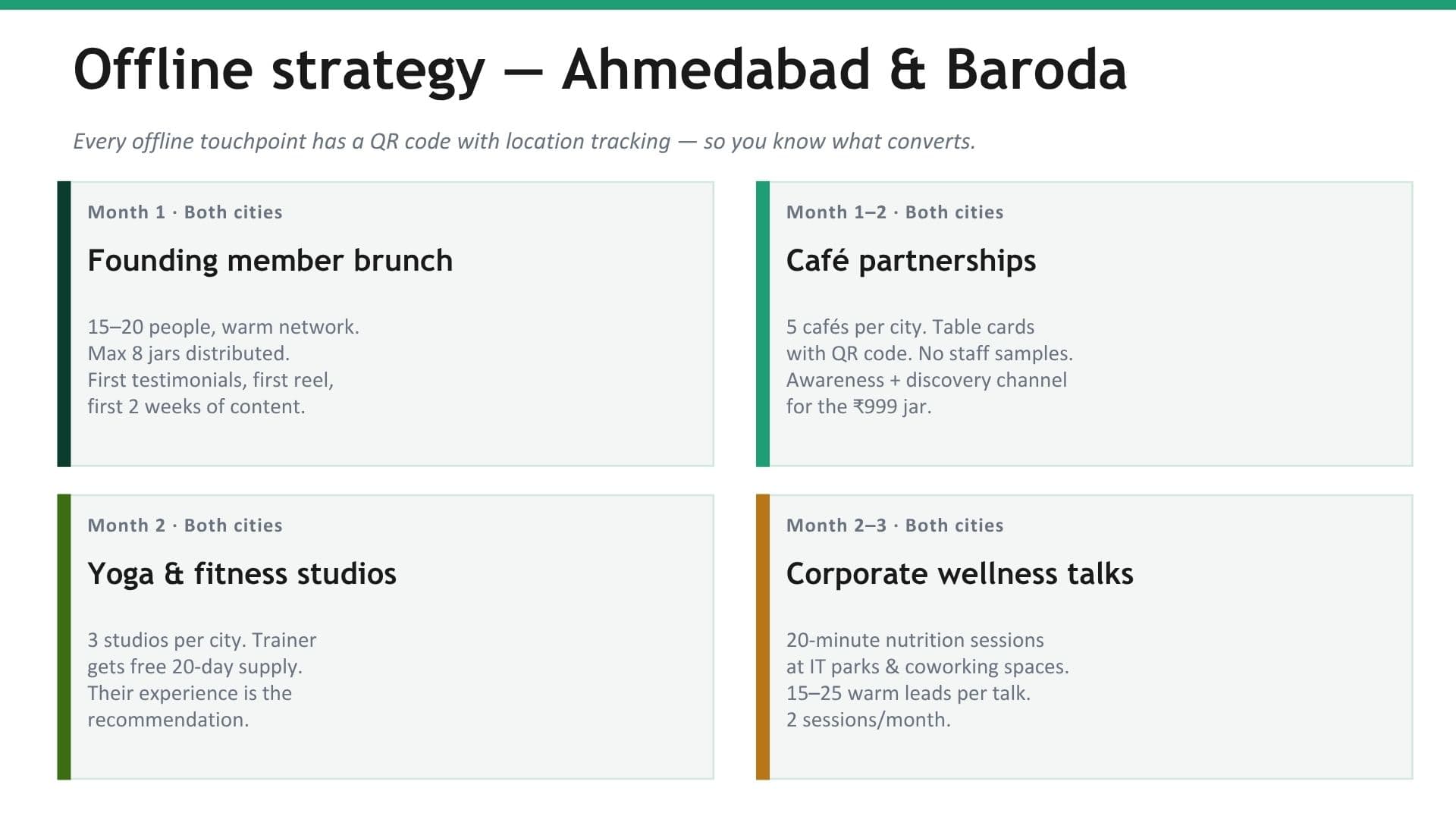
Two-track channel architecture: digital and offline, each mapped to a segment. Online runs Instagram and WhatsApp for the primary 25–40 urban segment — short-form demos, data posts, and UGC proof. Offline runs through Ahmedabad and Baroda for the secondary mothers segment — founding member brunches, café partnerships, yoga studio seeding, and corporate wellness talks. Every touchpoint carries a QR code with location tracking so the team knows what converts.
Offline Activation
The offline strategy for Ahmedabad and Baroda builds trust through physical presence where the secondary segment already spends time. Every offline touchpoint carries a QR code with location tracking so the team knows exactly what converts and where.
Conversion Funnel
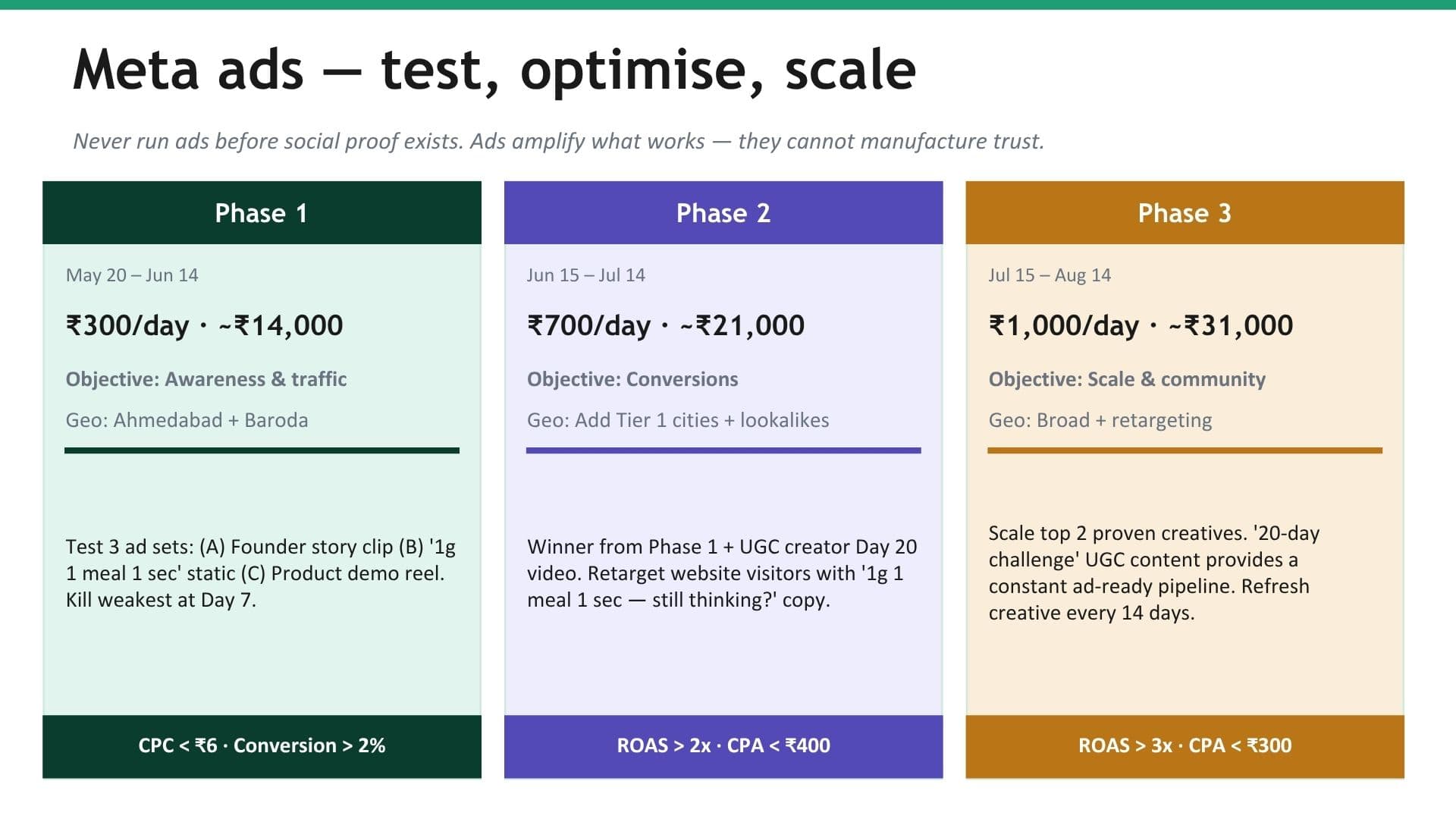
The GTM funnel runs from awareness through trust to first purchase and repeat. Each phase has a defined content type and conversion mechanic. The brand story episodes create awareness. The demo content builds trust. The 20-day UGC journeys drive repeat purchase and referral. Metrics tracked at each stage: reach, saves, DMs, trial orders, and subscription conversion.
“Don’t change what you eat. Change what it does.”