Brand Strategy · Service Design · UX Design · 2024–2025
Turning a one-day food drive
into a year-round corporate movement.
The Brief
Banco Alimentare is Italy’s largest food bank — collecting and redistributing surplus food across the country. Their primary fundraising model was built around a single annual moment: the Giornata Nazionale della Colletta Alimentare.
The problem wasn’t a lack of goodwill from businesses. It was the absence of any framework for year-round corporate commitment. Companies that wanted to participate more had no structured pathway to do so.
Build Loyalty
Identify new tools and activities to retain existing corporate donors so they continue donating surplus food on a sustained basis.
New Business
Design activities, tools, and ideas to bring new food companies into the donation network for the first time.
Our Approach
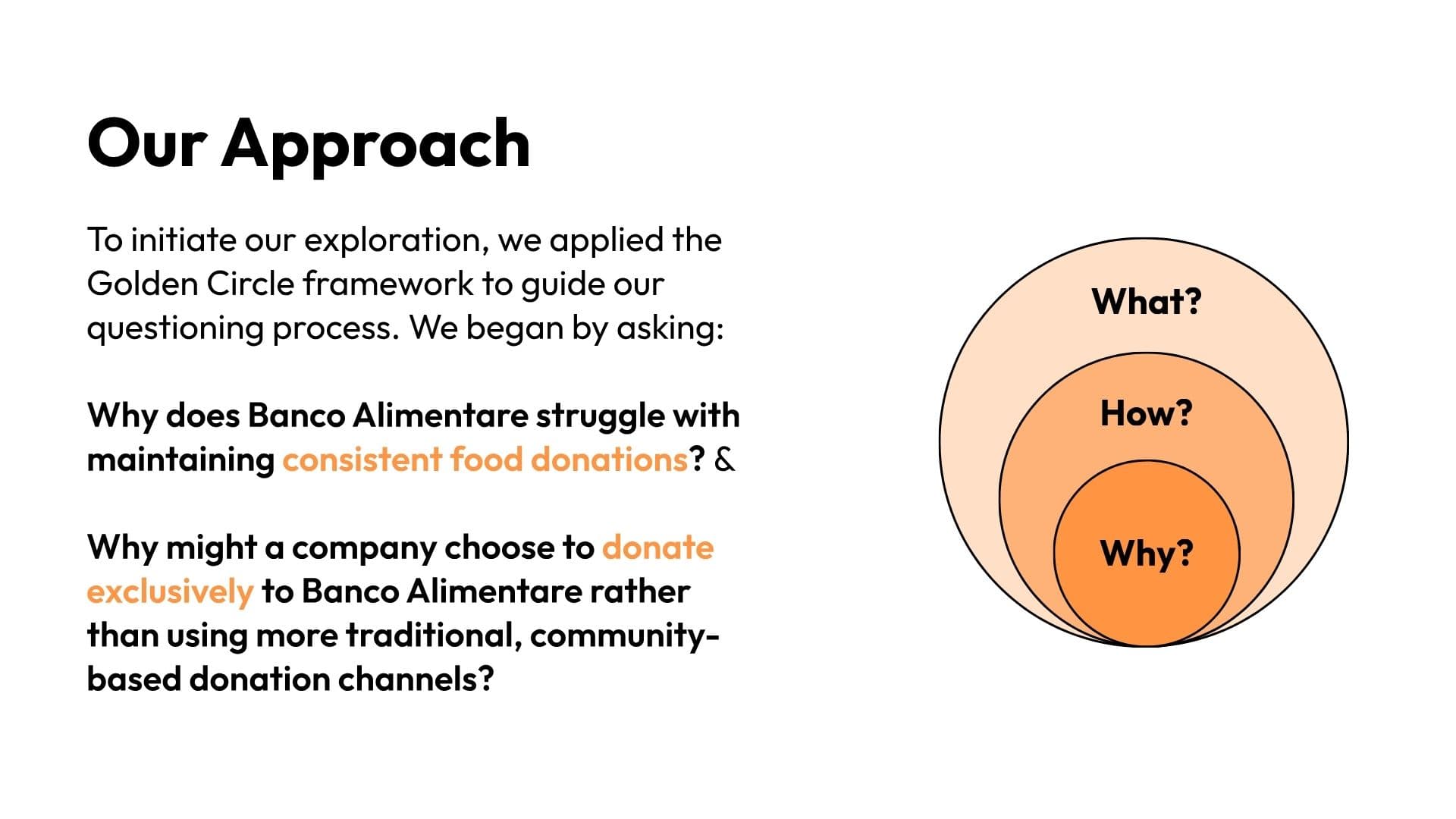
We applied the Golden Circle framework to orient our research — starting not with what to design, but with why Banco Alimentare was struggling to sustain consistent food-raising efforts.
Why does Banco Alimentare struggle with maintaining consistent food donations? And why might a company choose to donate exclusively to Banco Alimentare rather than through more traditional, community-based channels?
Research & Insights
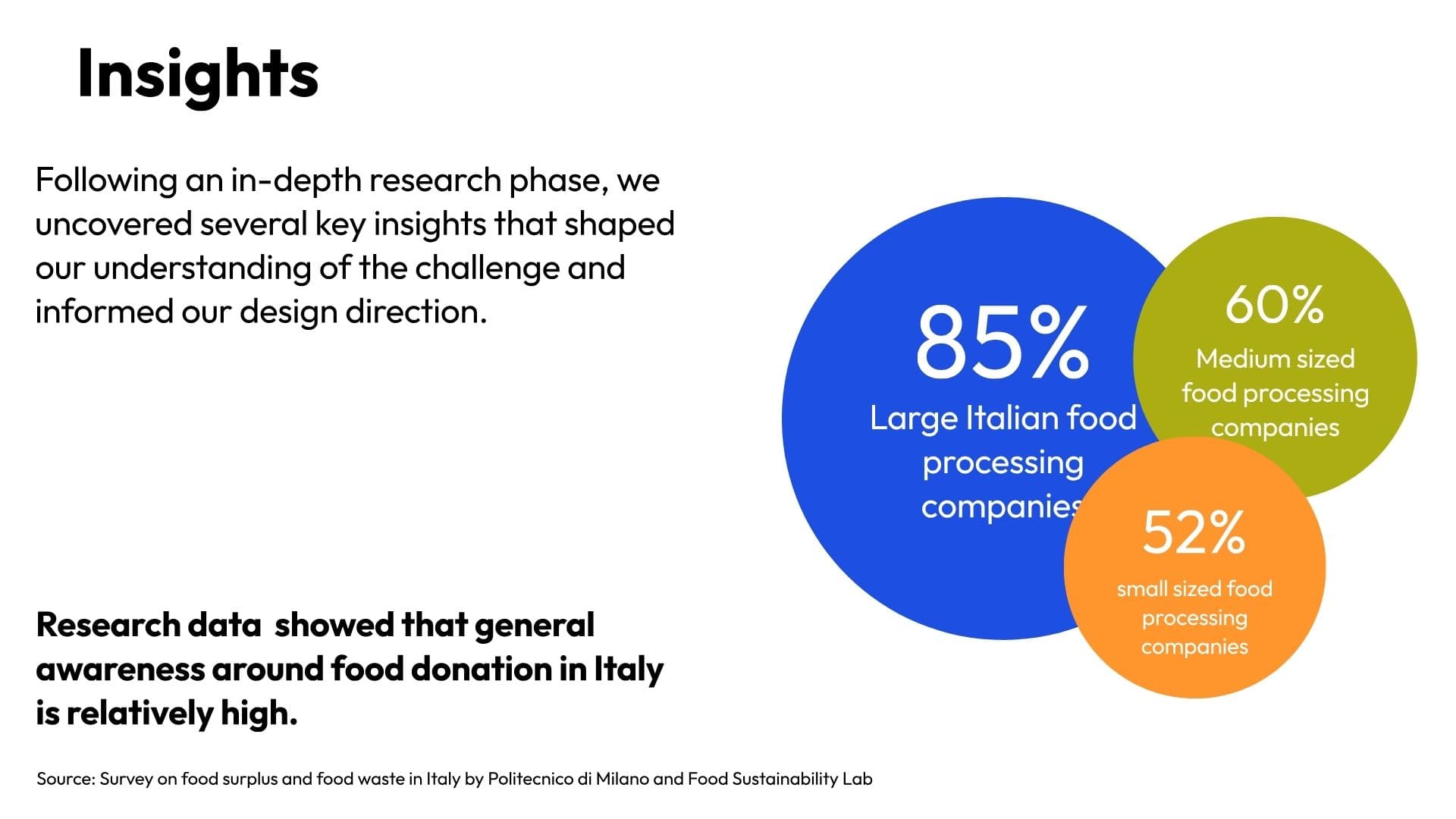
Following an in-depth research phase, we uncovered several key insights. General awareness around food donation in Italy is relatively high — but the conversion from awareness to sustained action was broken across all company sizes.
85% of large Italian food processing companies, 60% of medium-sized, and 52% of small companies showed awareness of donation opportunities — yet sustained participation remained low. The barrier was structural, not motivational.
Context: The Gadda Law
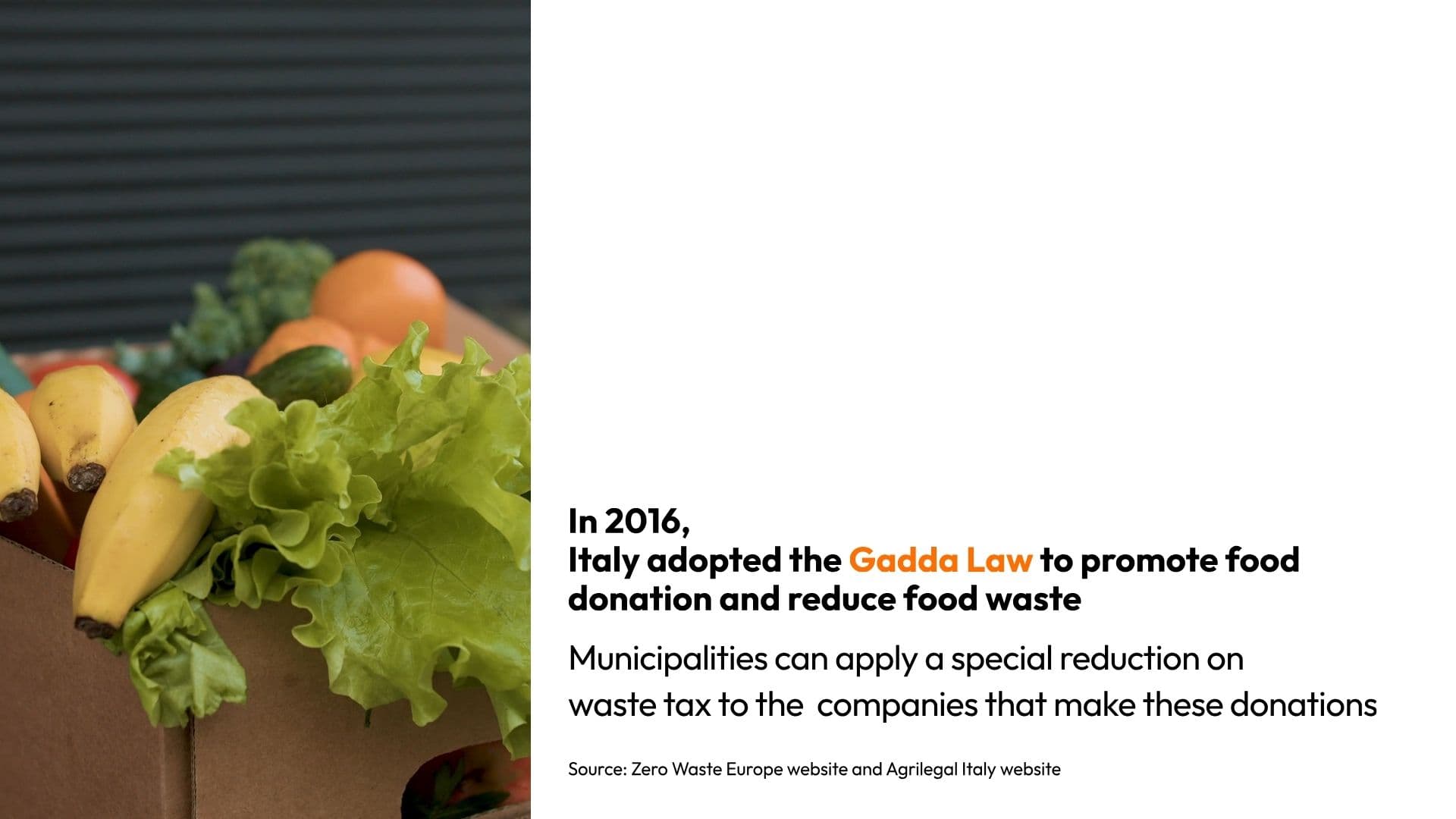
In 2016, Italy adopted the Gadda Law to promote food donation and reduce food waste. Municipalities can apply a special reduction on waste tax to companies that make donations — a real financial incentive that most businesses were not leveraging. The legislative framework existed. The service infrastructure to activate it did not.
The Current Journey
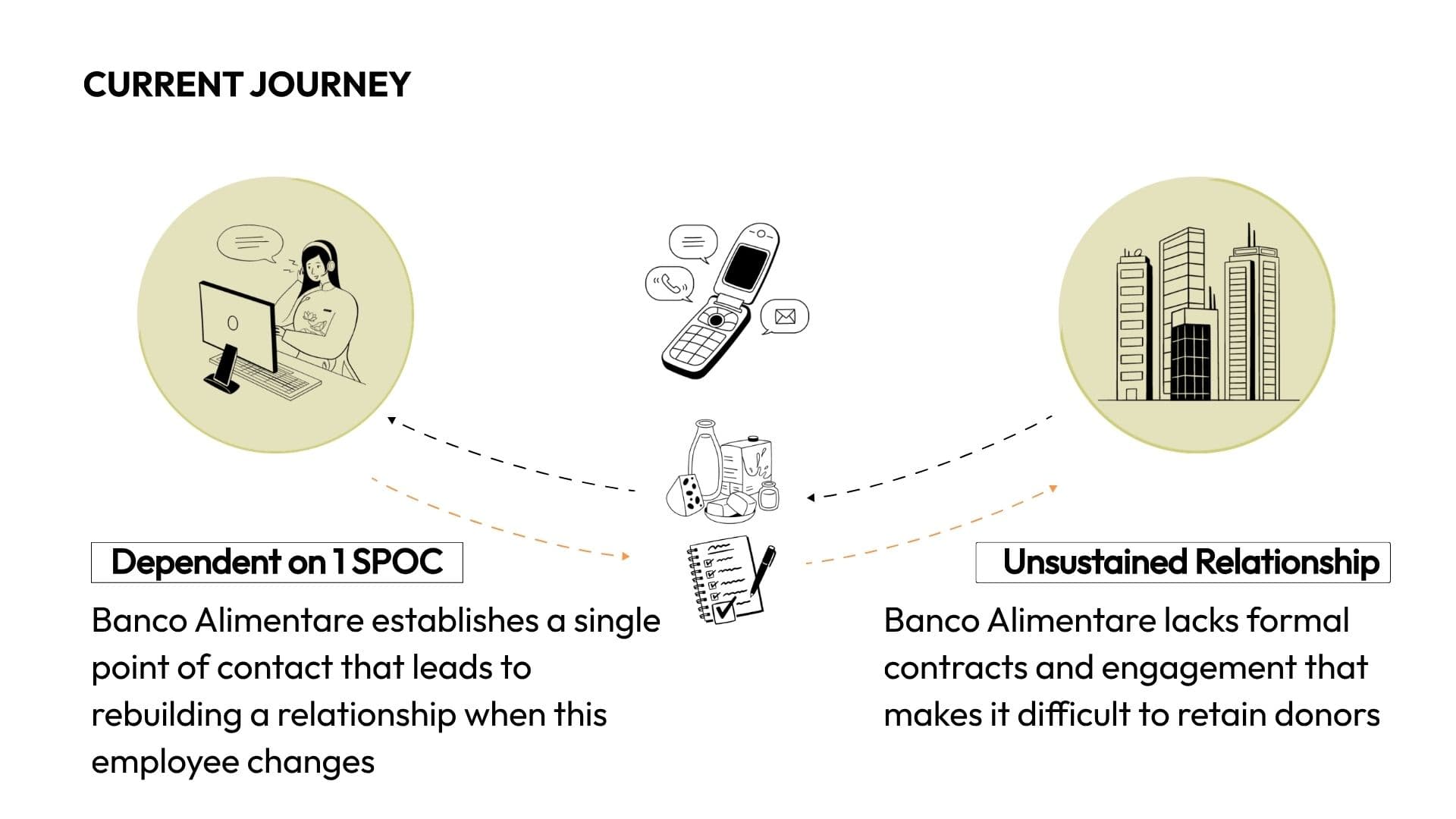
Mapping how Banco Alimentare managed corporate relationships revealed two compounding structural failures that made sustained commitment nearly impossible to maintain.
Dependent on 1 SPOC — A single point of contact managed each relationship. When that employee moved on, the entire relationship reset from zero. Unsustained Relationship — Without formal contracts or structured engagement, donor retention was fragile and entirely reliant on goodwill.
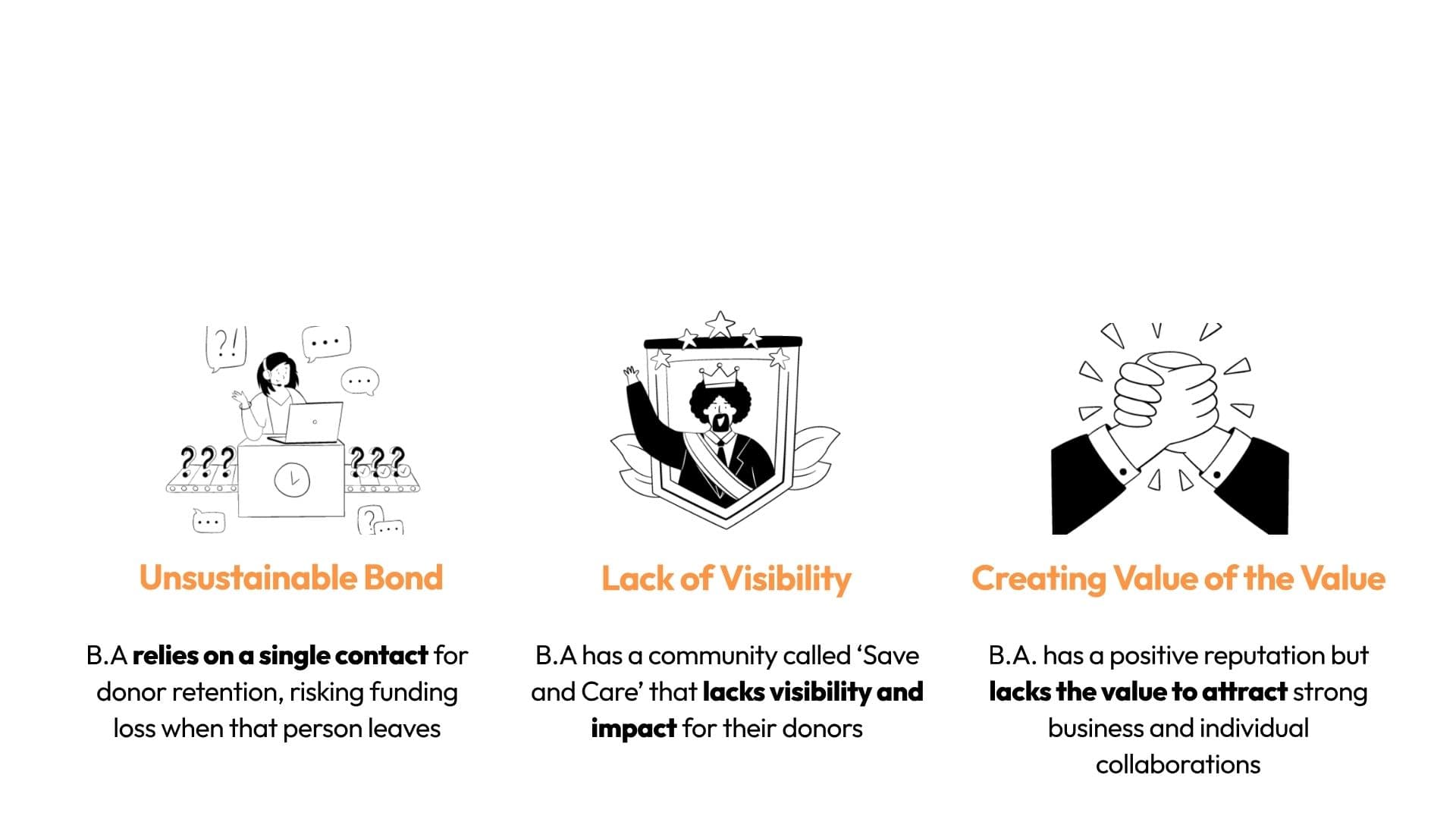
Three Root Causes
Through analysis of the current landscape and our research findings, we identified three underlying reasons why Banco Alimentare struggled to sustain consistent food-raising: an unsustainable bond structure, a lack of community visibility, and an inability to demonstrate tangible value to corporate partners.
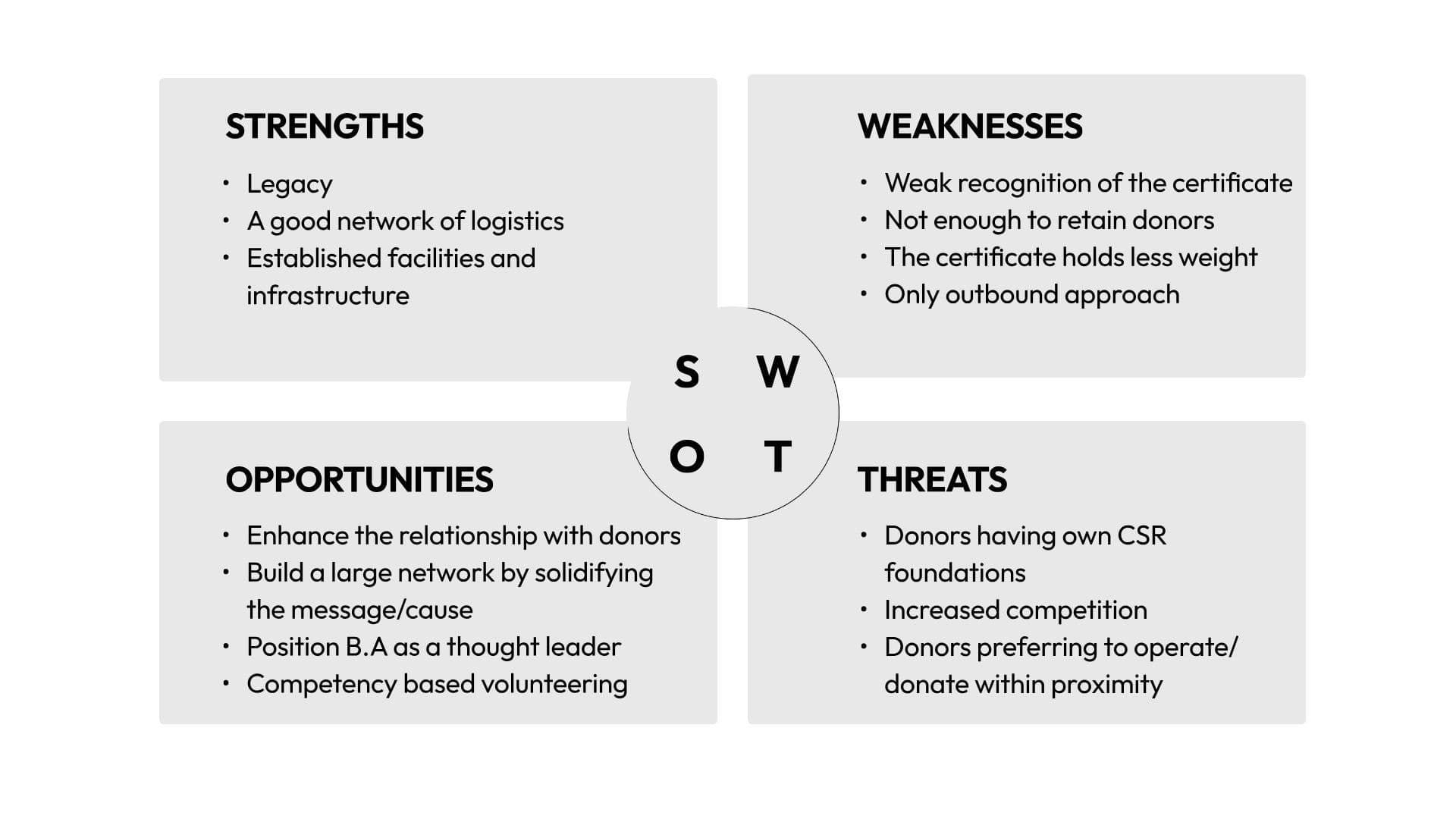
SWOT Analysis
To uncover potential opportunities, we conducted a SWOT analysis of Banco Alimentare. Strengths: legacy, strong logistics network, established infrastructure. The key strategic opportunity — enhance donor relationships, build a stronger cause narrative, and position B.A. as a thought leader in food system responsibility.
“How might we build sustainable relationships with donor organisations while positioning Banco Alimentare as a valuable and strategic partner?”
Future Envisioning
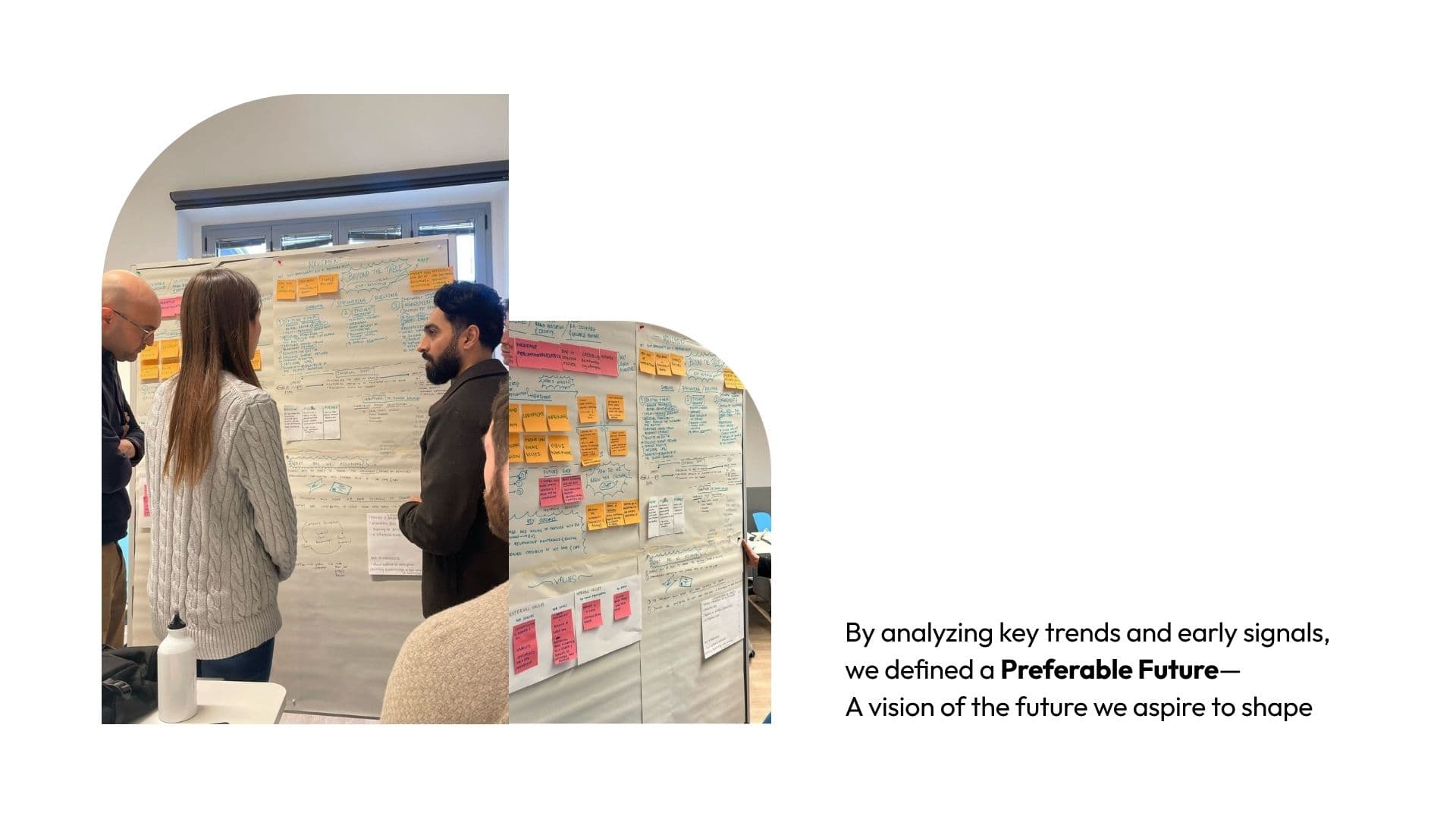
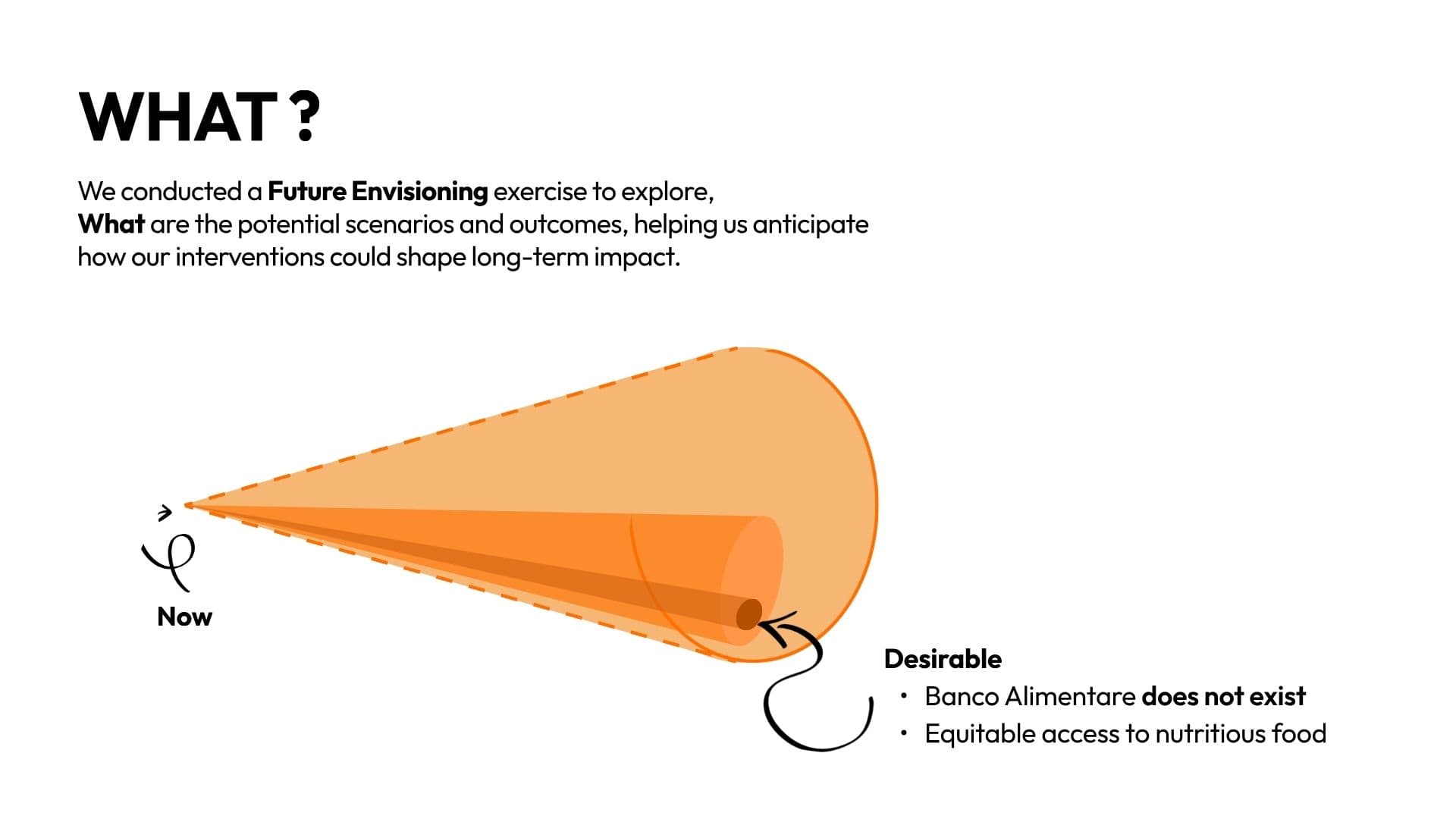
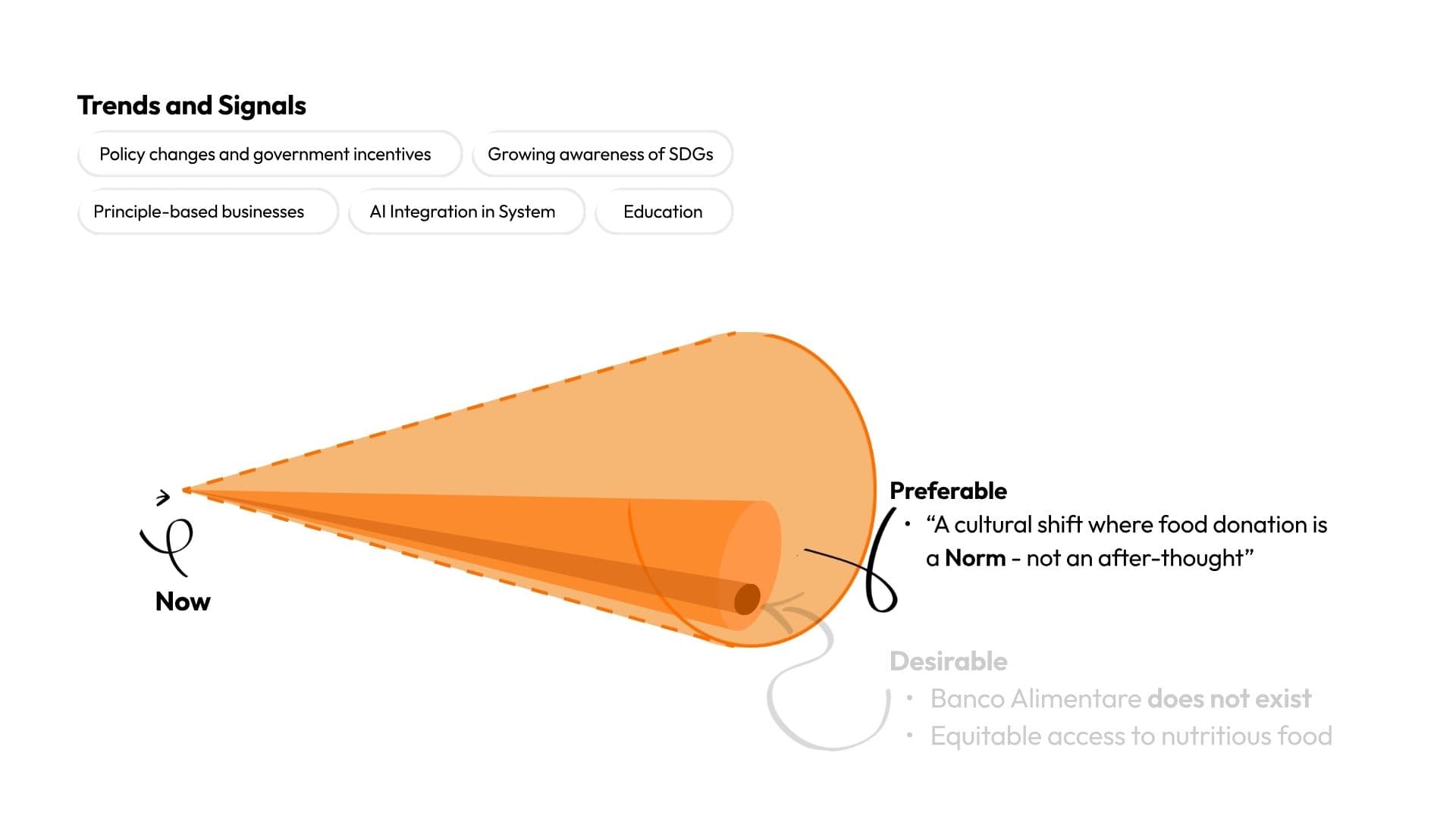
We ran a Future Envisioning exercise with the full team — analysing trends and early signals to define the Preferable Future our intervention should aim toward: a cultural shift where food donation is a norm, not an afterthought.
Introducing: Beyond the Table
“Beyond the Table by Banco Alimentare” — a corporate certification programme that repositions food donation from a one-time action into a long-term identity commitment for businesses. Not just charity. Infrastructure.
Mission
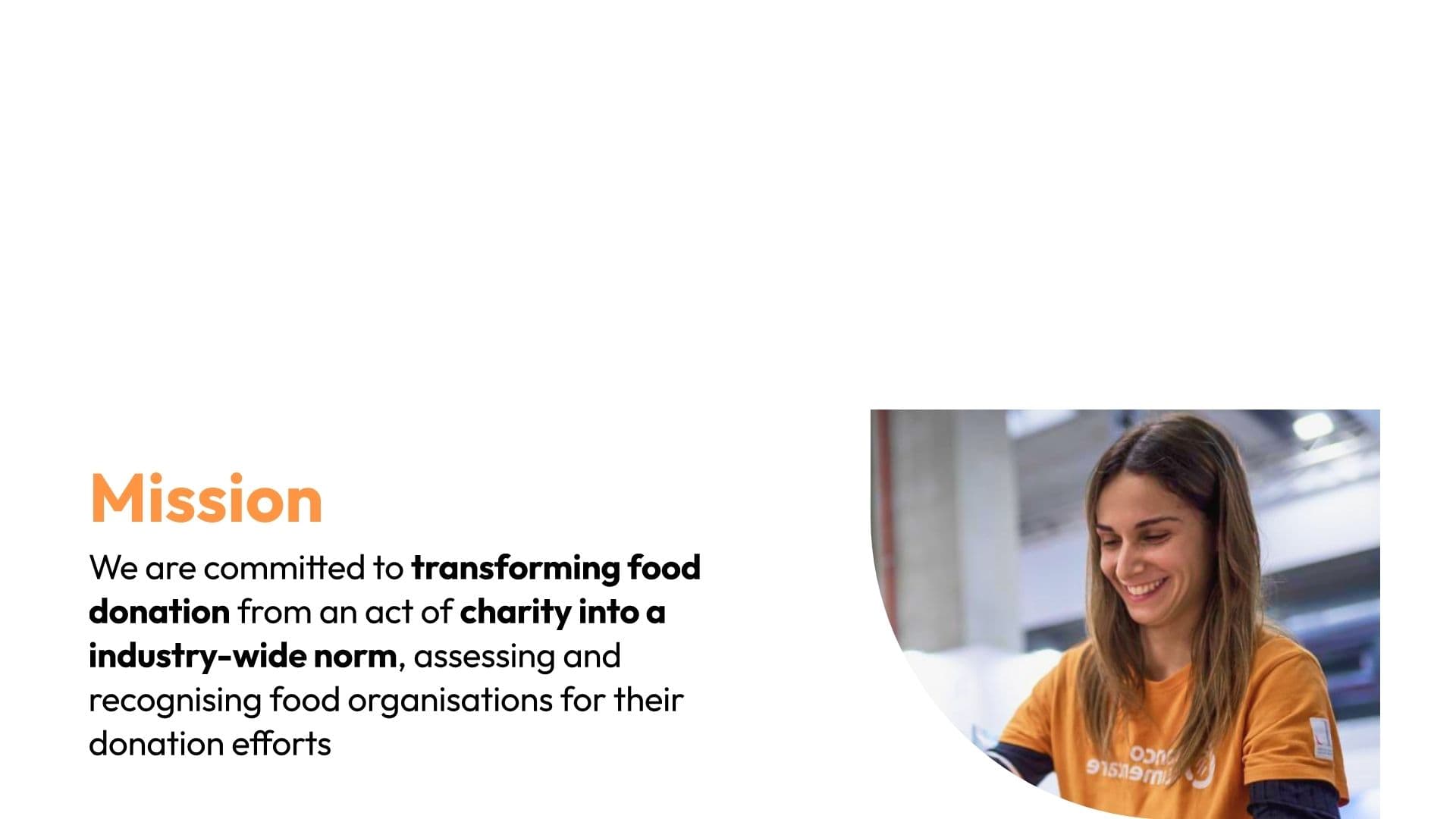
Transforming food donation from an act of charity into an industry-wide norm — recognising organisations for their contribution.
Vision
A future where equitable access to food is a norm, and businesses actively participate to build a responsible food system.
Purpose
Enabling and empowering businesses to commit to food donation through long-term partnerships.
The Offering
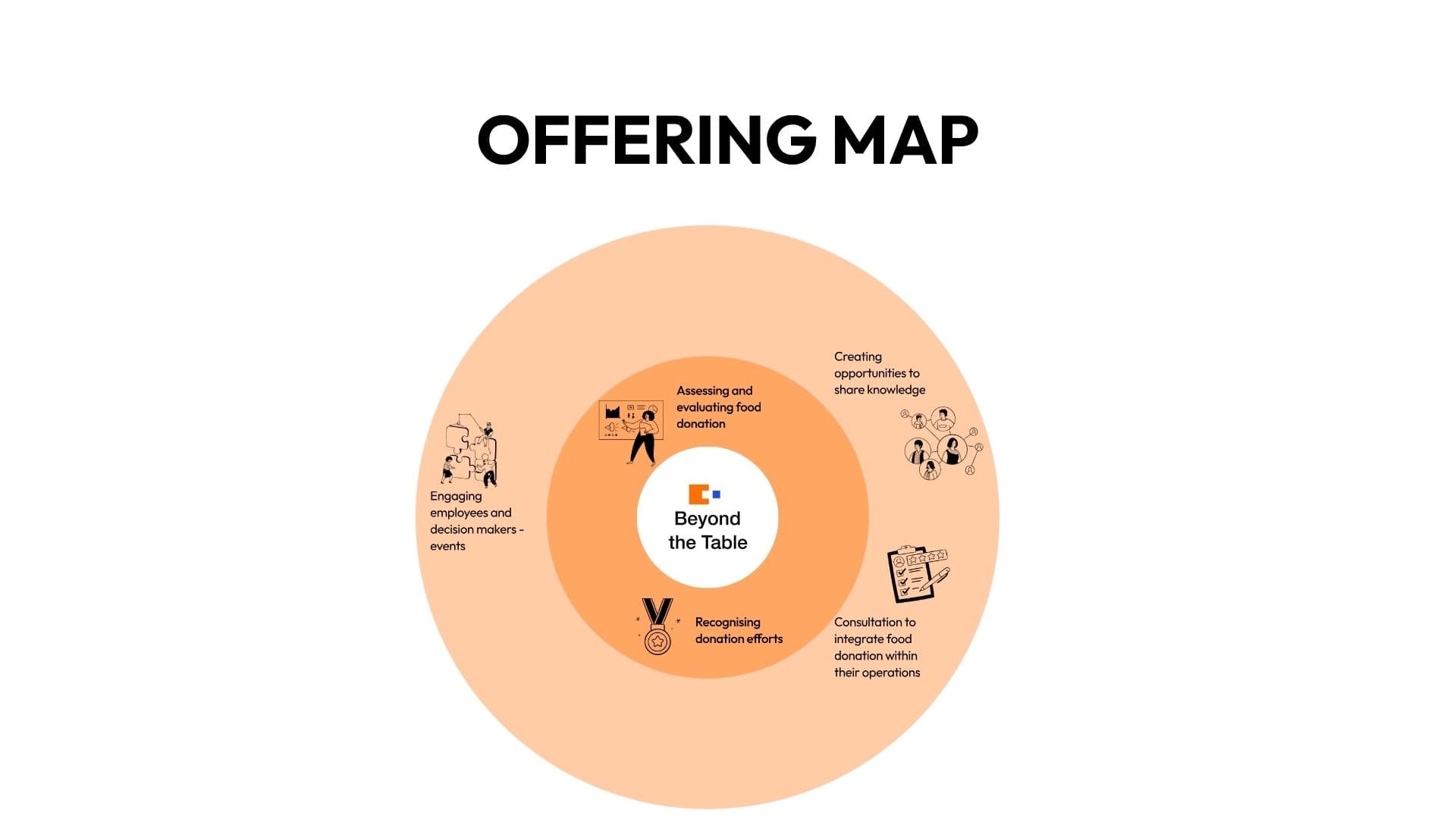
Beyond the Table was structured around five service pillars: assessing and evaluating donation efforts, recognising contribution with a visible badge, creating knowledge-sharing opportunities, providing consultation to integrate donation into operations, and engaging employees and decision-makers through flagship events.
The Service: Partnership Cycle
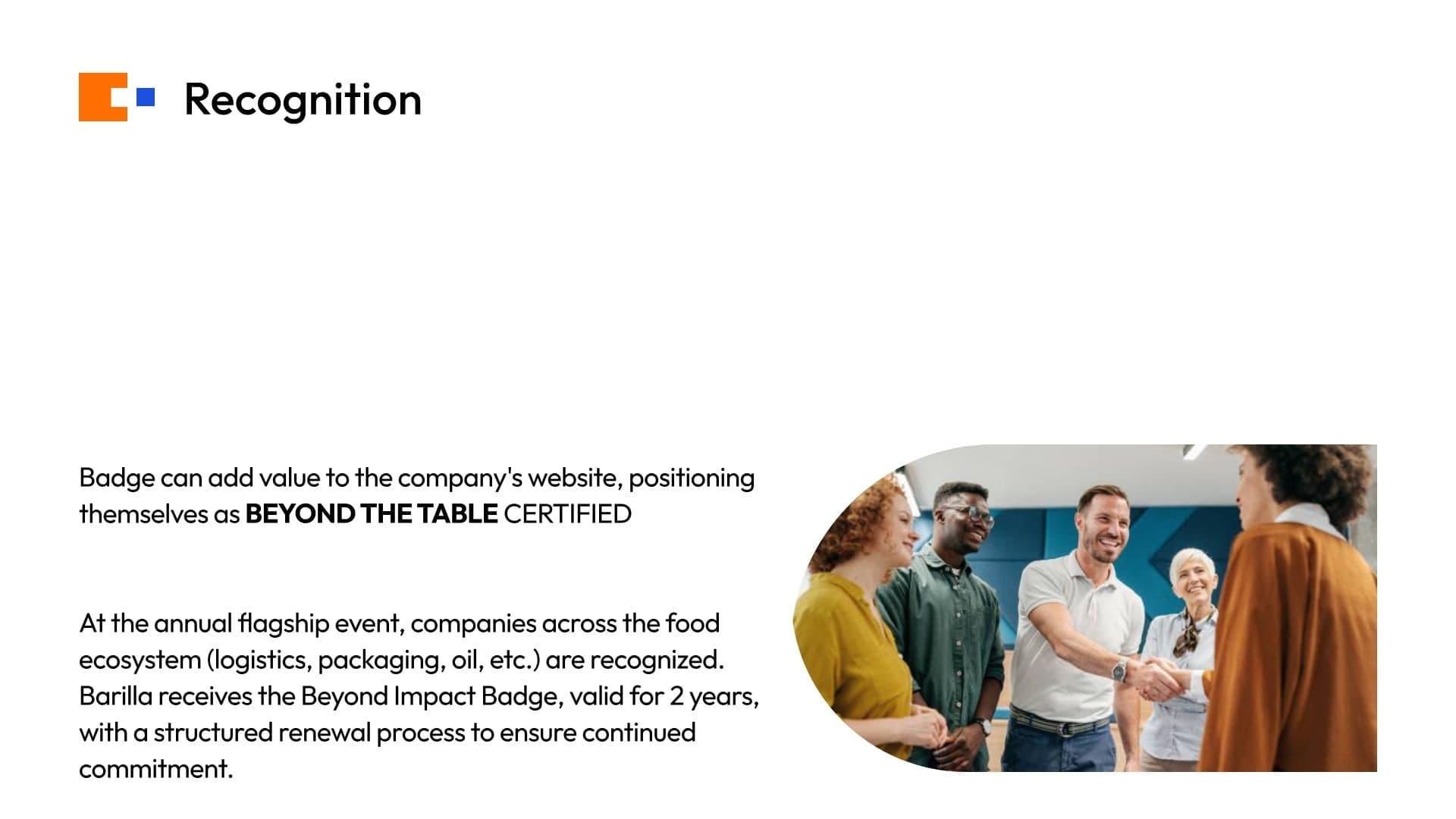
The service was designed as a full Partnership Cycle — a repeating loop of onboarding, engagement, recognition, and renewal that replaces the one-off donation model entirely. Pre-launch awareness feeds onboarding, which feeds value creation, which leads to impact recognition — and a structured 2-year renewal keeps companies inside the system indefinitely.
Onboarding
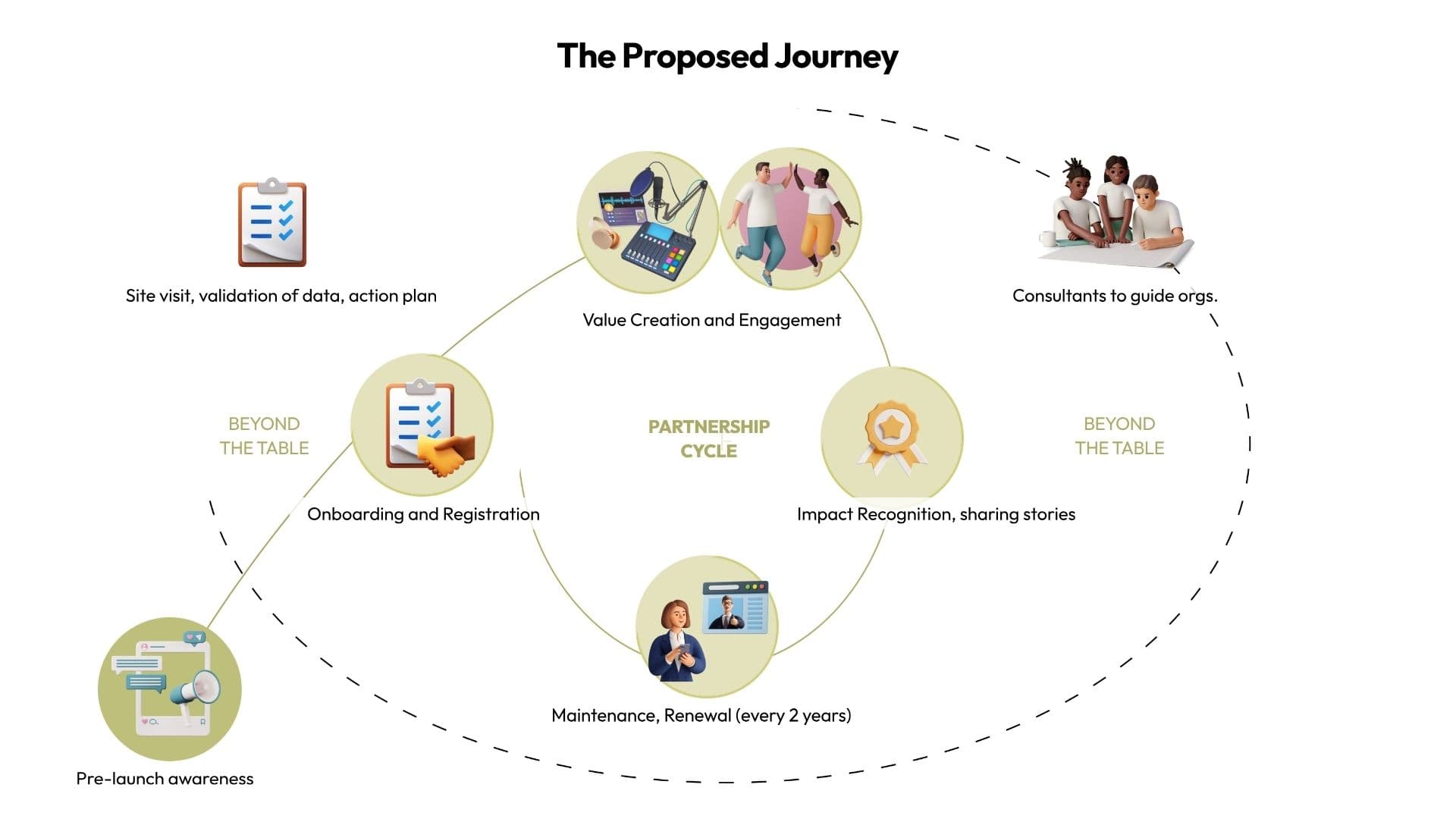
Beyond The Table conducts site visits and collects data to craft a tailored action plan for each organisation. A quantitative Survey assesses current donation behaviour, and every company receives a Best Practices Book — a reference guide for following the certification process. Where needed, dedicated consultants support full implementation.
Recognition
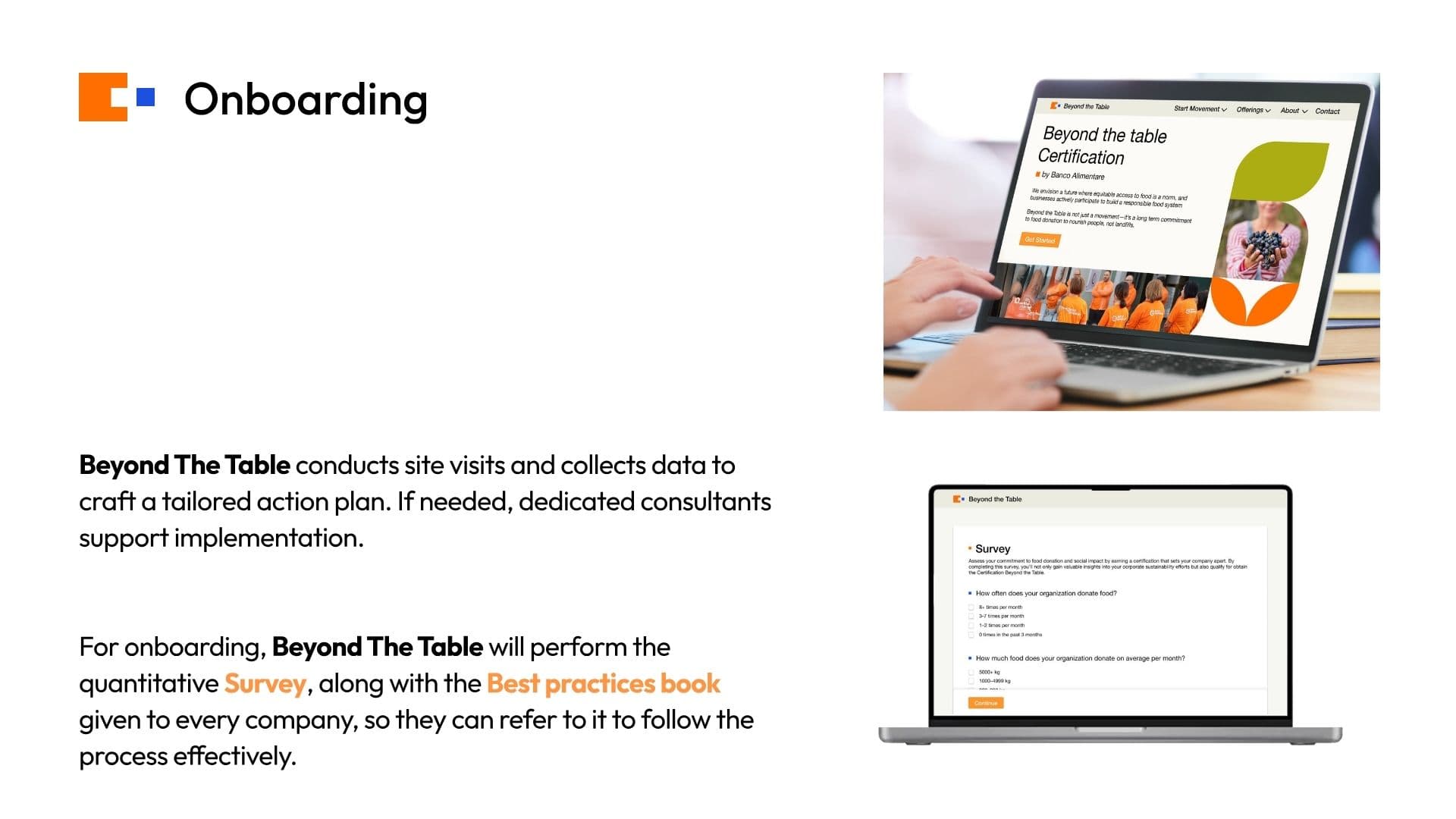
The Beyond Impact Badge can be displayed on a company’s website — positioning them publicly as Beyond the Table Certified. At the annual flagship event, companies across the full food ecosystem are recognised for their contribution. The badge is valid for 2 years, with a structured renewal process to ensure continued commitment rather than one-time status.
Impact Model
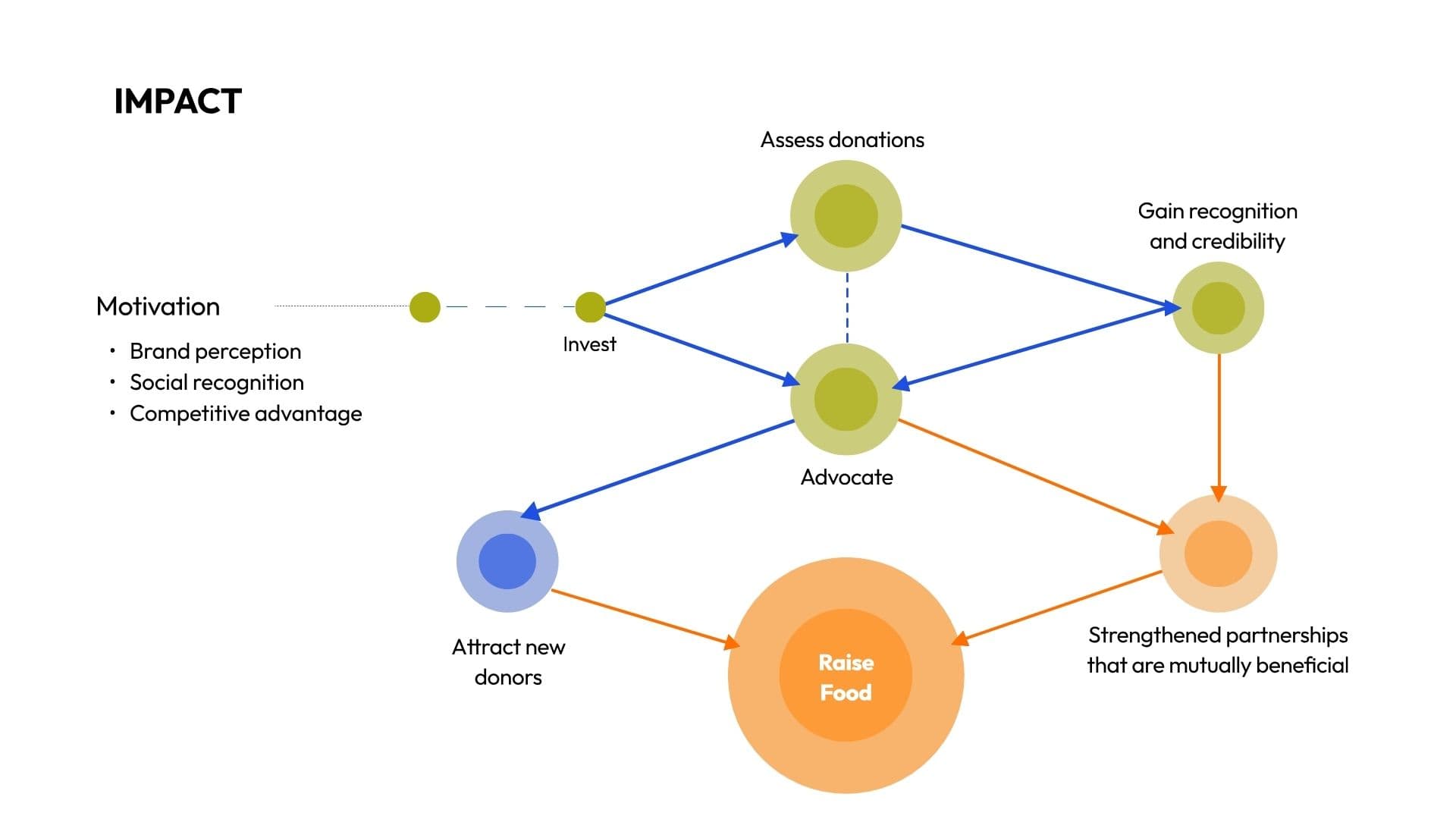
The impact model connects donor motivation — brand perception, social recognition, competitive advantage — to concrete outcomes: food raised, new donors attracted, and partnerships strengthened over time. Investment flows into assessment and advocacy, which creates compounding returns for both Banco Alimentare and its corporate partners.
The Presentation
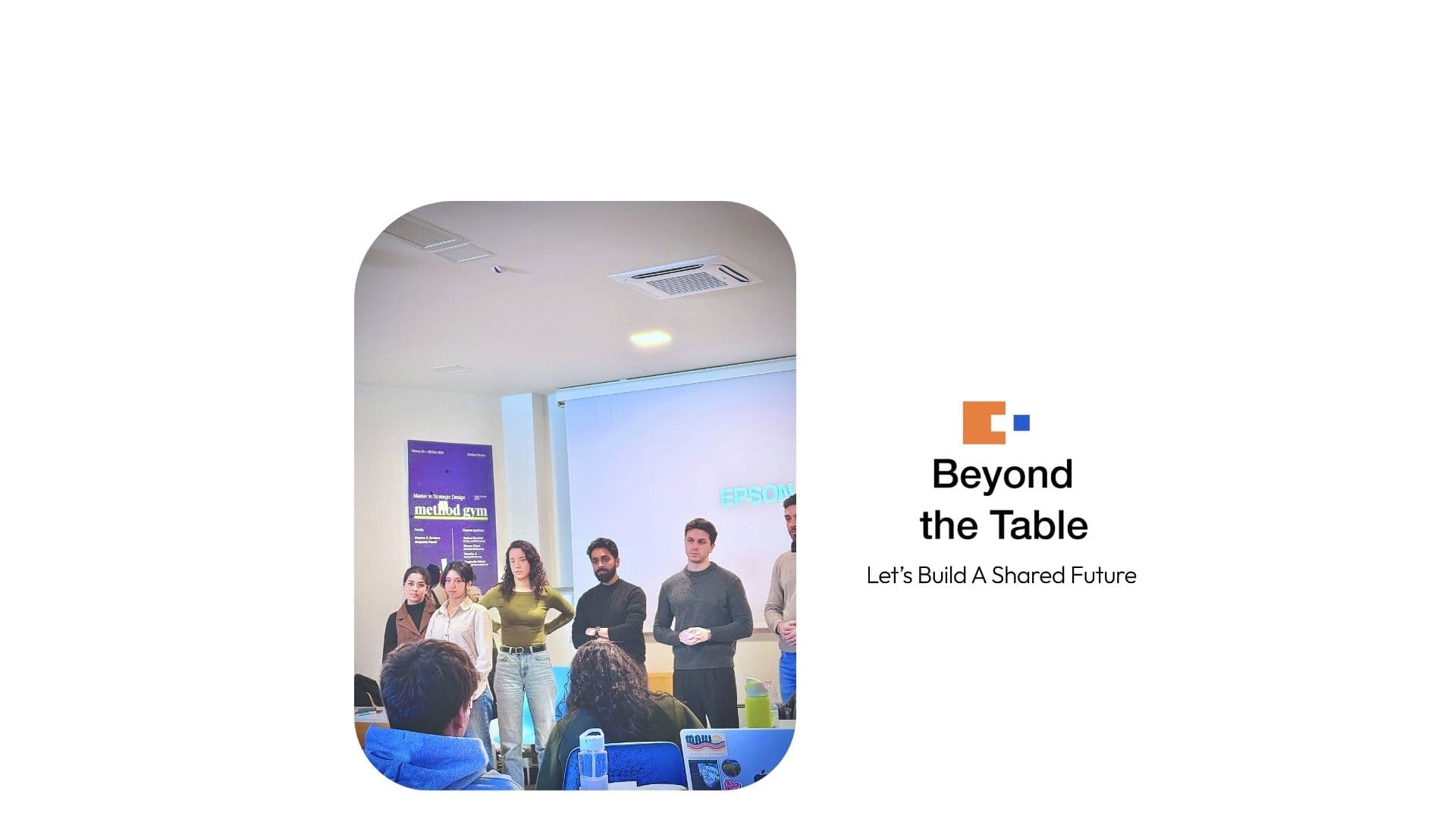
The team presented Beyond the Table at Politecnico di Milano’s Design Method Gym — the MSc Strategic Design programme’s public presentation format — to faculty, classmates, and Banco Alimentare client stakeholders. Research, workshop outputs, concept, brand identity, UX design, and the full service system were presented and defended in full.
What Was Delivered
“Businesses don’t fail to donate because they don’t care. They fail to donate consistently because there is no infrastructure for sustained commitment. Design the infrastructure, and the behaviour follows.”