AI Strategy · Enterprise Innovation · Master Thesis · 2024–2026
Designing AI-assisted innovation
inside a 30,000-person organisation.
The Problem
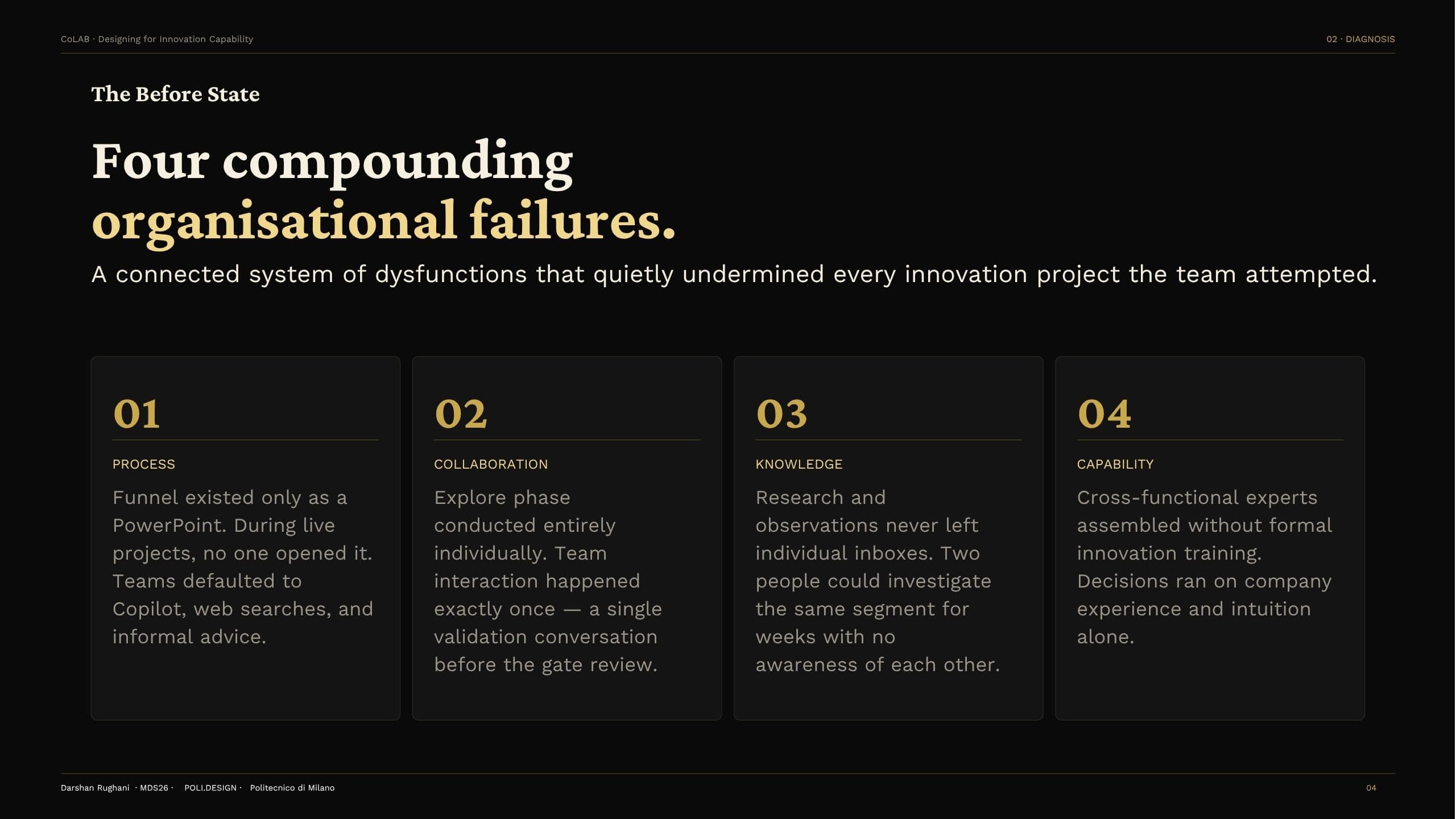
A major European retailer’s New Commercial Development division was responsible for finding the next generation of commercial opportunities — before competitors did. They had a six-stage innovation funnel. But the first stage, the one that frames every decision that follows, had no system at all. No shared workspace. No protocol. No shared language.
The challenge was not to add more AI tools. It was to design a workflow that 50+ people across functions could actually use, trust, and iterate on together.
The Design Challenge
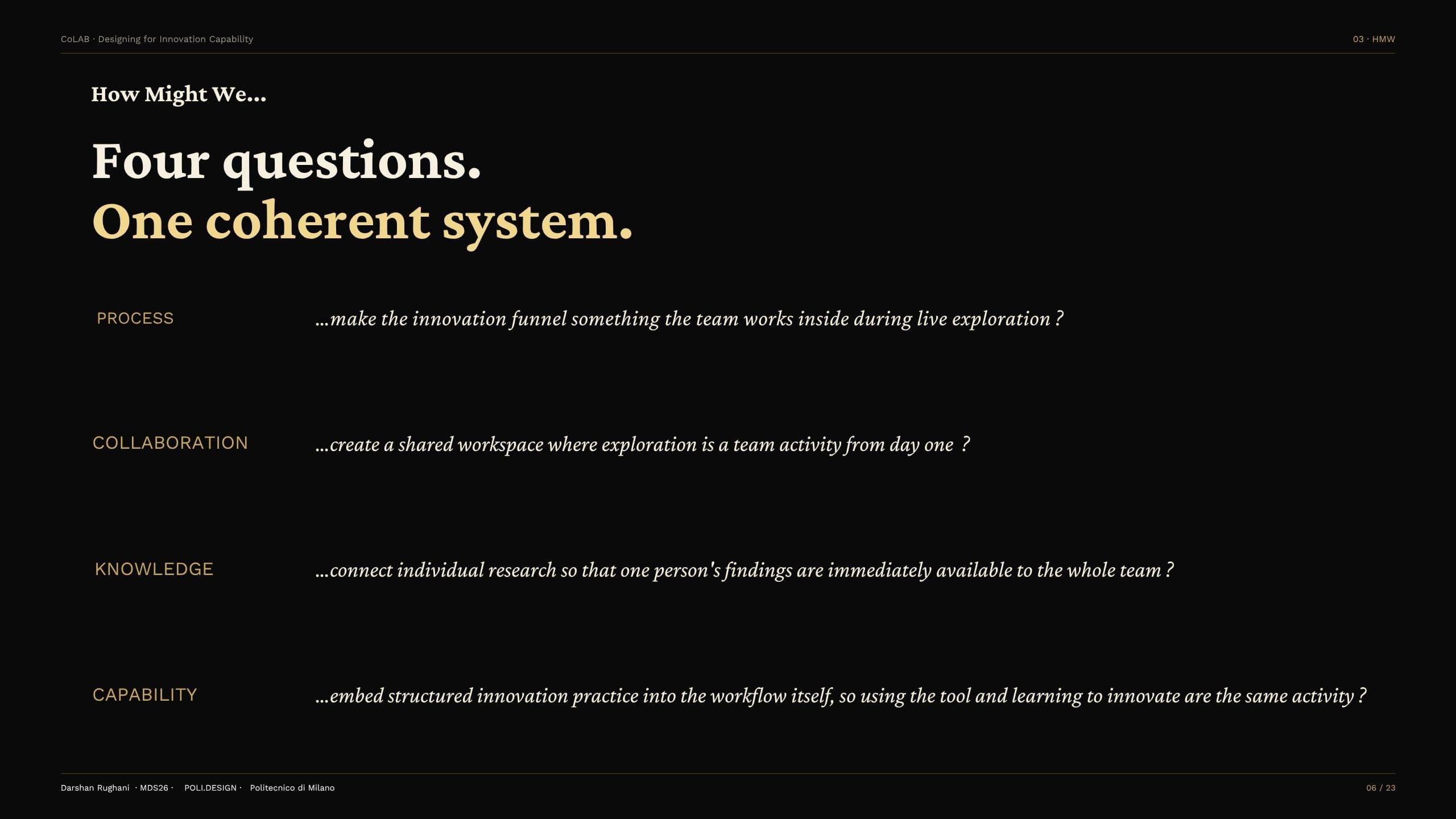
From the diagnosis, four How Might We questions emerged — one for each failure mode. Process, collaboration, knowledge, and capability. The design brief became: how do you build a single coherent system that answers all four simultaneously?
Process
Phase 1 — Workflow Prototype Design
Designed and built an AI-assisted innovation workflow prototype using rapid prototyping techniques. The goal was to give the division a shared mental model for how AI maps to their existing stages of work: idea exploration, experimentation, and iteration.
Phase 2 — AI Product Co-Development
Led early-stage market research and concept framing for an AI-enabled product being co-developed with an external vendor. Contributed strategic inputs that directly shaped the product roadmap and compressed the vendor's development timeline by 3+ months.
Phase 3 — Trend Detection Tool
Developed prototype logic for an AI-powered trend detection system that enabled the innovation team to act on emerging product signals 6–8 weeks earlier than their existing process allowed.
Phase 4 — Omnichannel Strategy
Contributed to the design of an omnichannel strategy mapping 10–20 customer touchpoints across physical and digital retail channels. Supported pilot rollout across 3–5 stores with iterative refinement.
Key Output
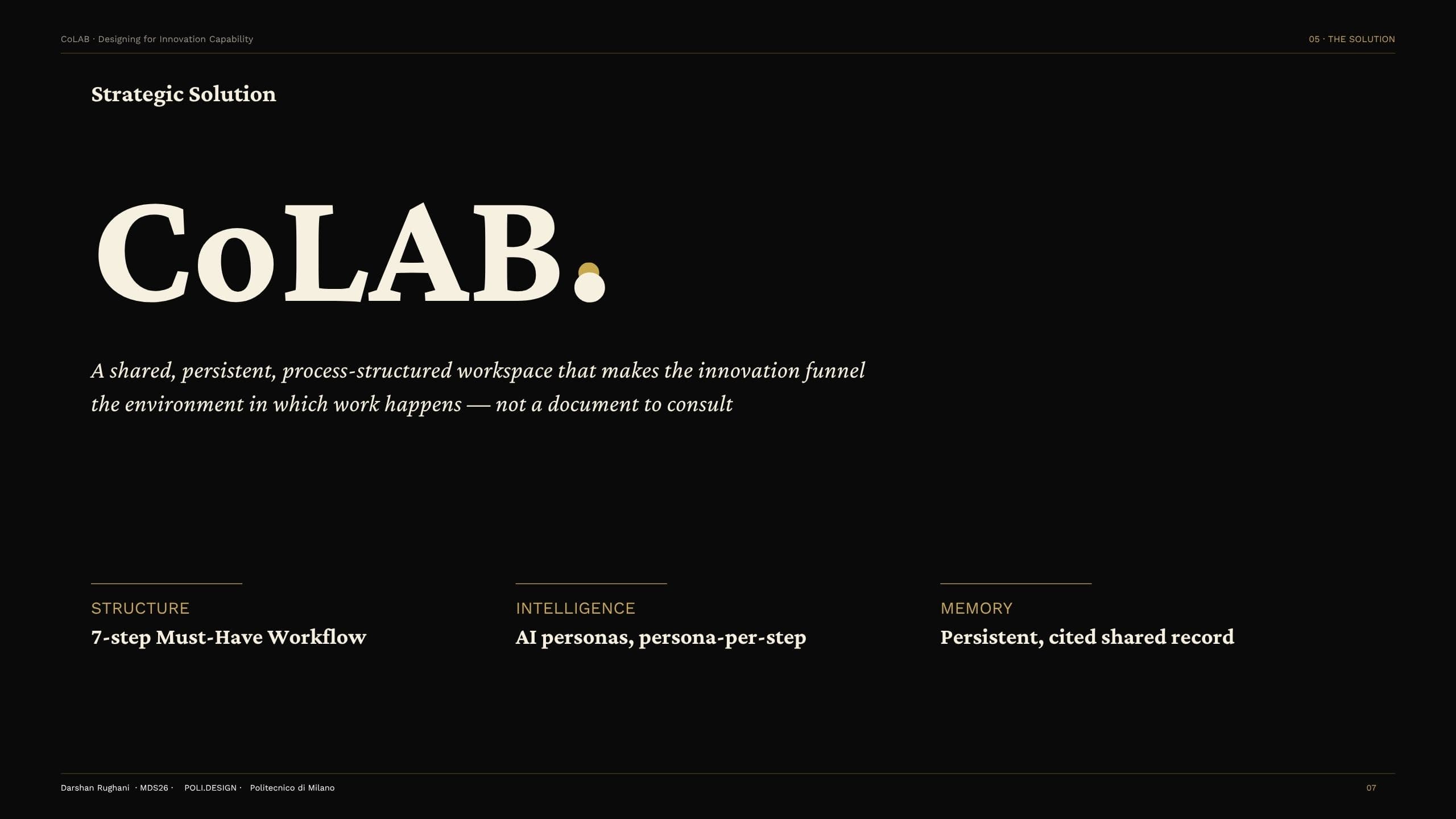
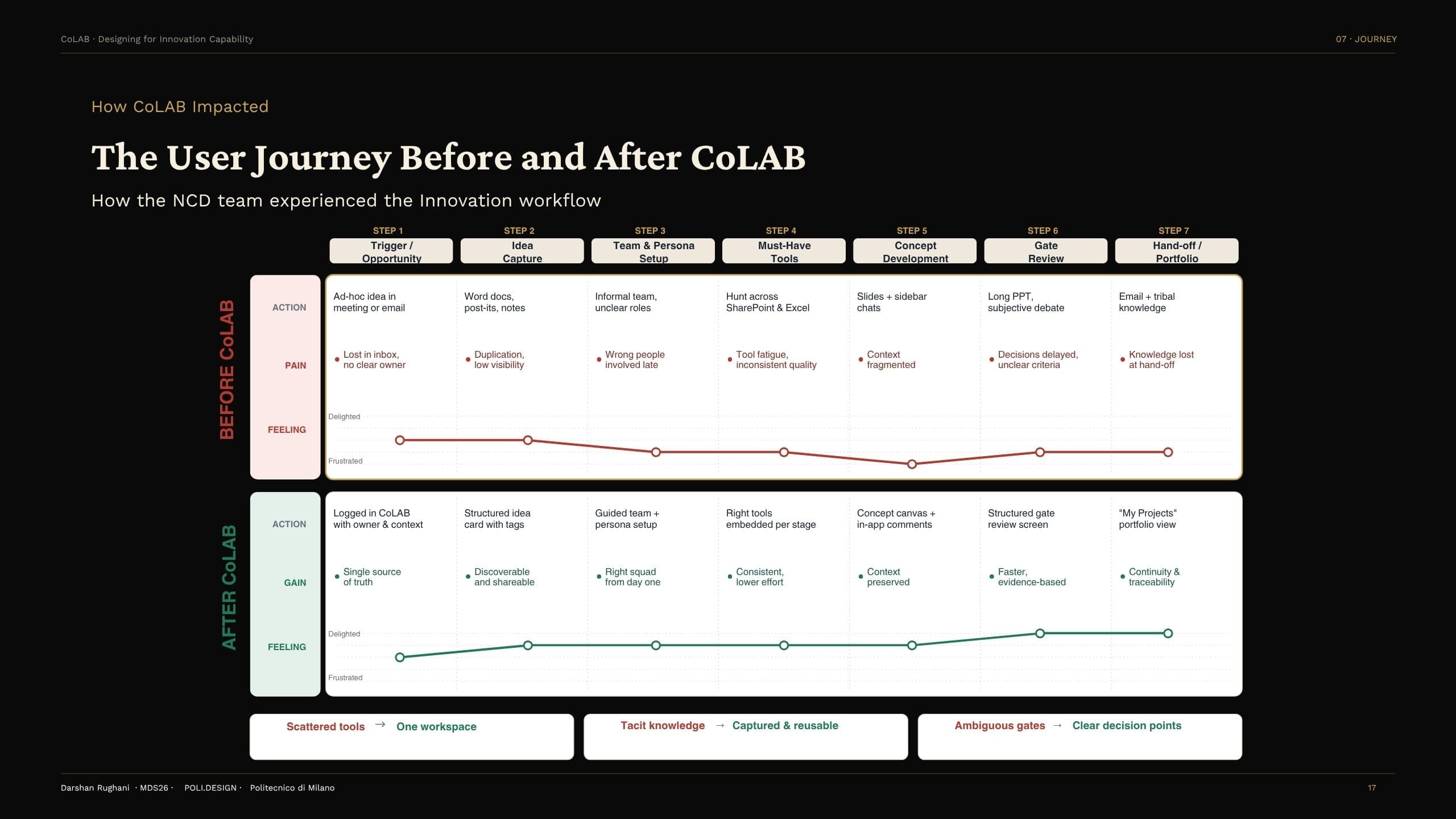
CoLAB — a shared, persistent, process-structured workspace that makes the innovation funnel the environment in which work happens, not a document to consult. The before/after user journey map shows how the system transformed every step of the innovation workflow.
Outcomes
“Working inside a large organisation taught me that the hardest design problem isn’t the product — it’s the people system around it. Clarity of process is itself a strategic asset.”